Across Southeast Asia, strengthening STEM education increasingly depends not only on what happens in the classroom, but also on the ability of education leaders and institutions to respond to rapidly changing needs. From artificial intelligence and climate change to new expectations for future-ready skills, education systems require leaders who can turn emerging priorities into meaningful and sustainable change.
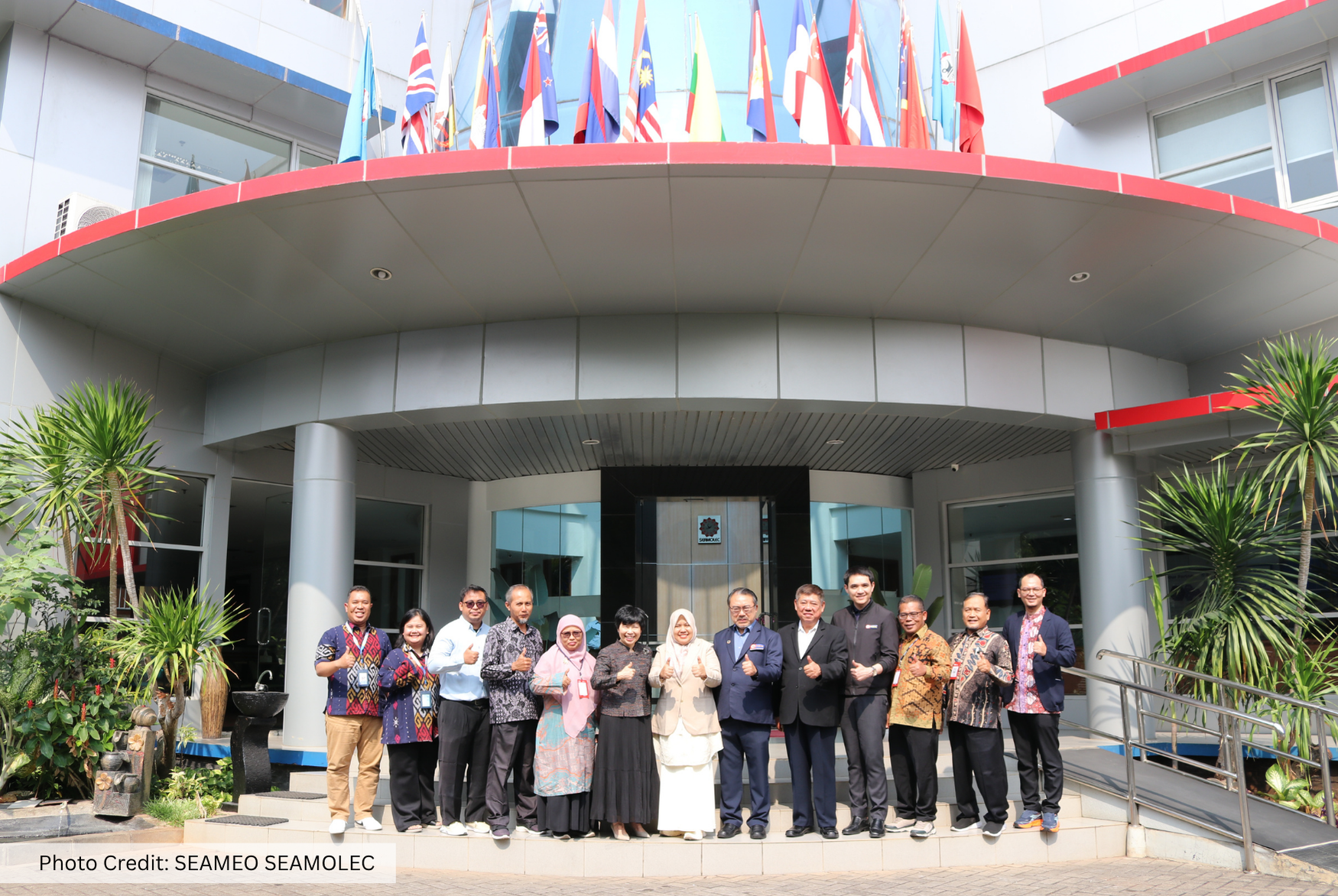
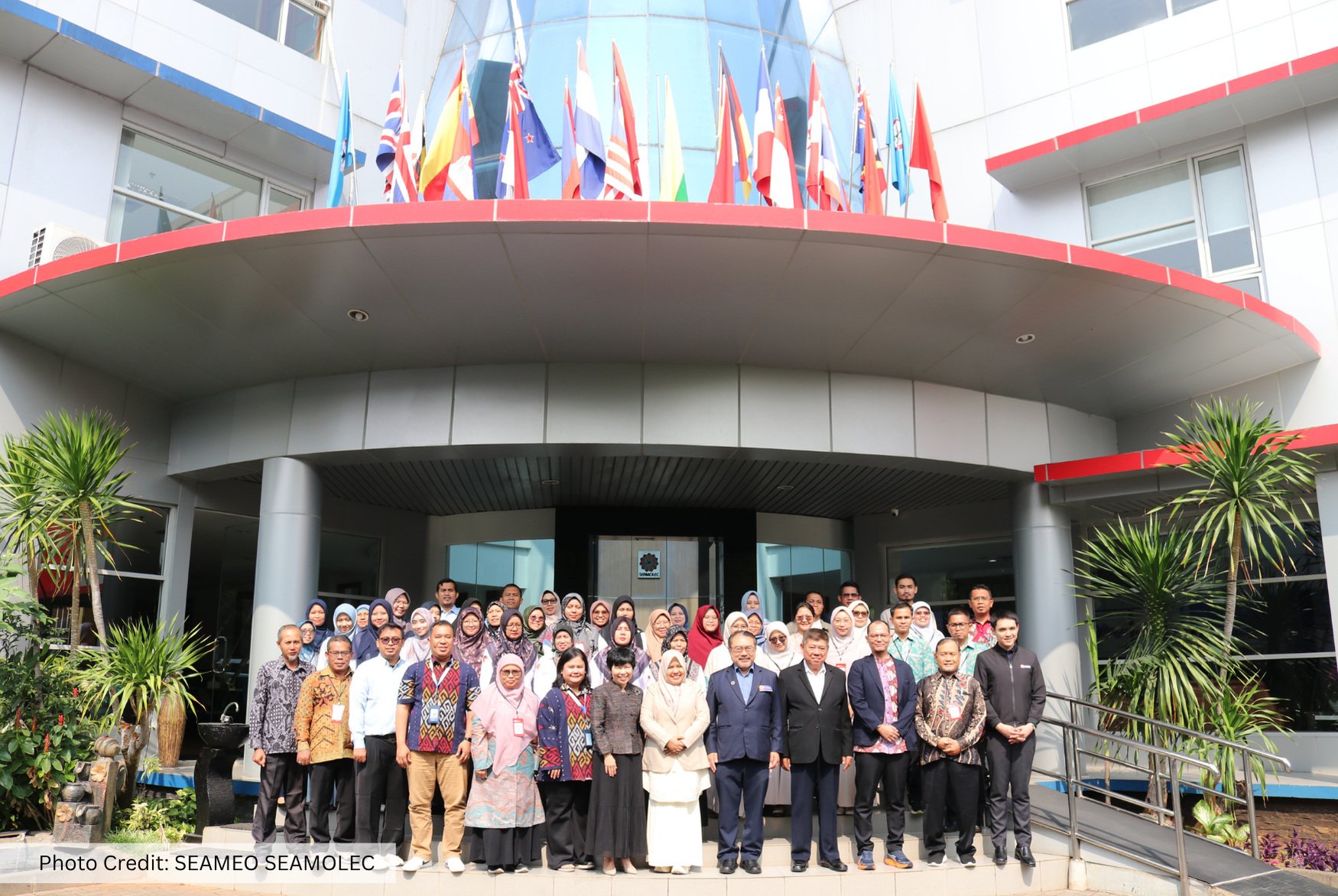
Against this backdrop, Dr Kessara Amornvuthivorn, Director of the SEAMEO Regional Centre for STEM Education (SEAMEO STEM-ED), visited Indonesia from 3–7 August 2026 as part of a regional mission to advance collaboration in STEM education and educational leadership. The mission brought together SEAMEO STEM-ED, the National Institute of Development Administration (NIDA), Thailand, SEAMEO SEAMOLEC, higher education institutions, government representatives and regional organisations.
The visit centred on a shared ambition: to strengthen the capacity of education leaders, build stronger institutional partnerships and explore opportunities to bring quality STEM education and future-ready competencies to more learners across the region.
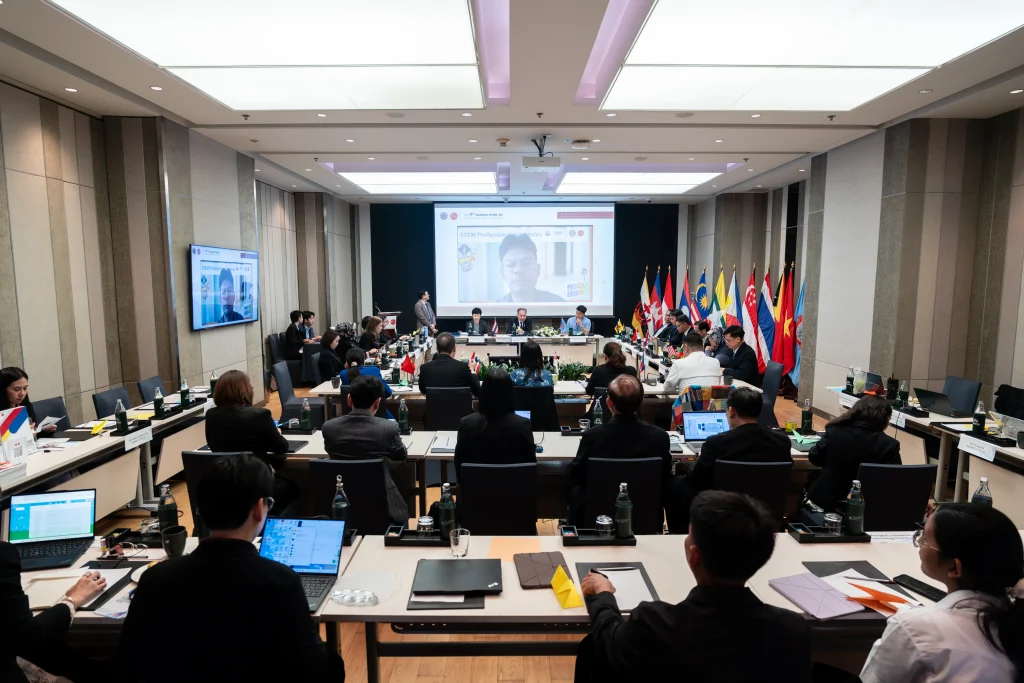
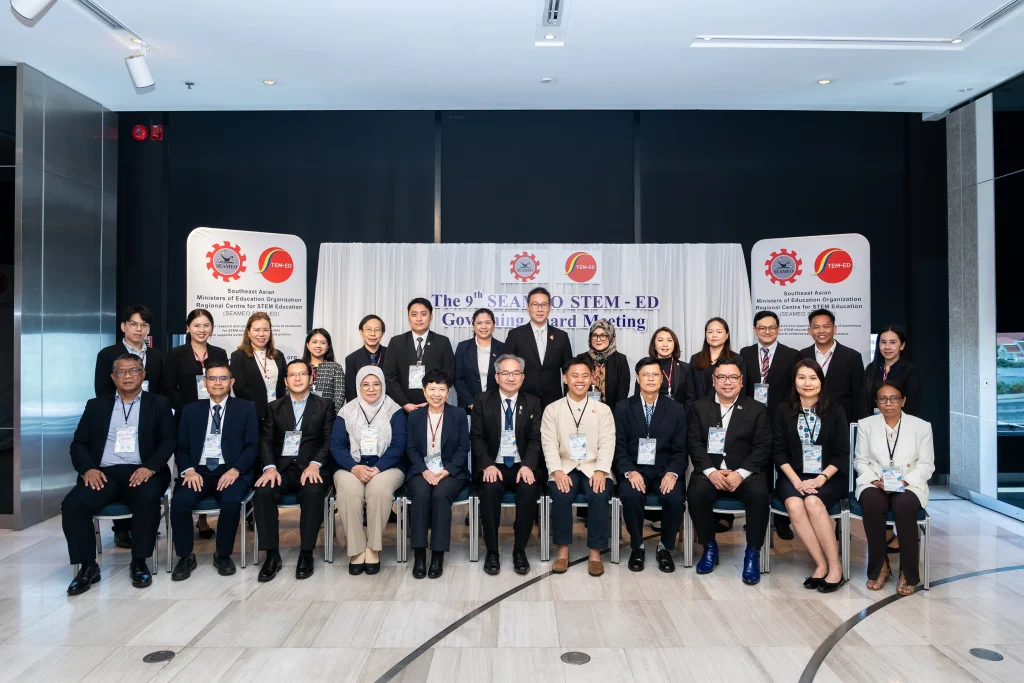
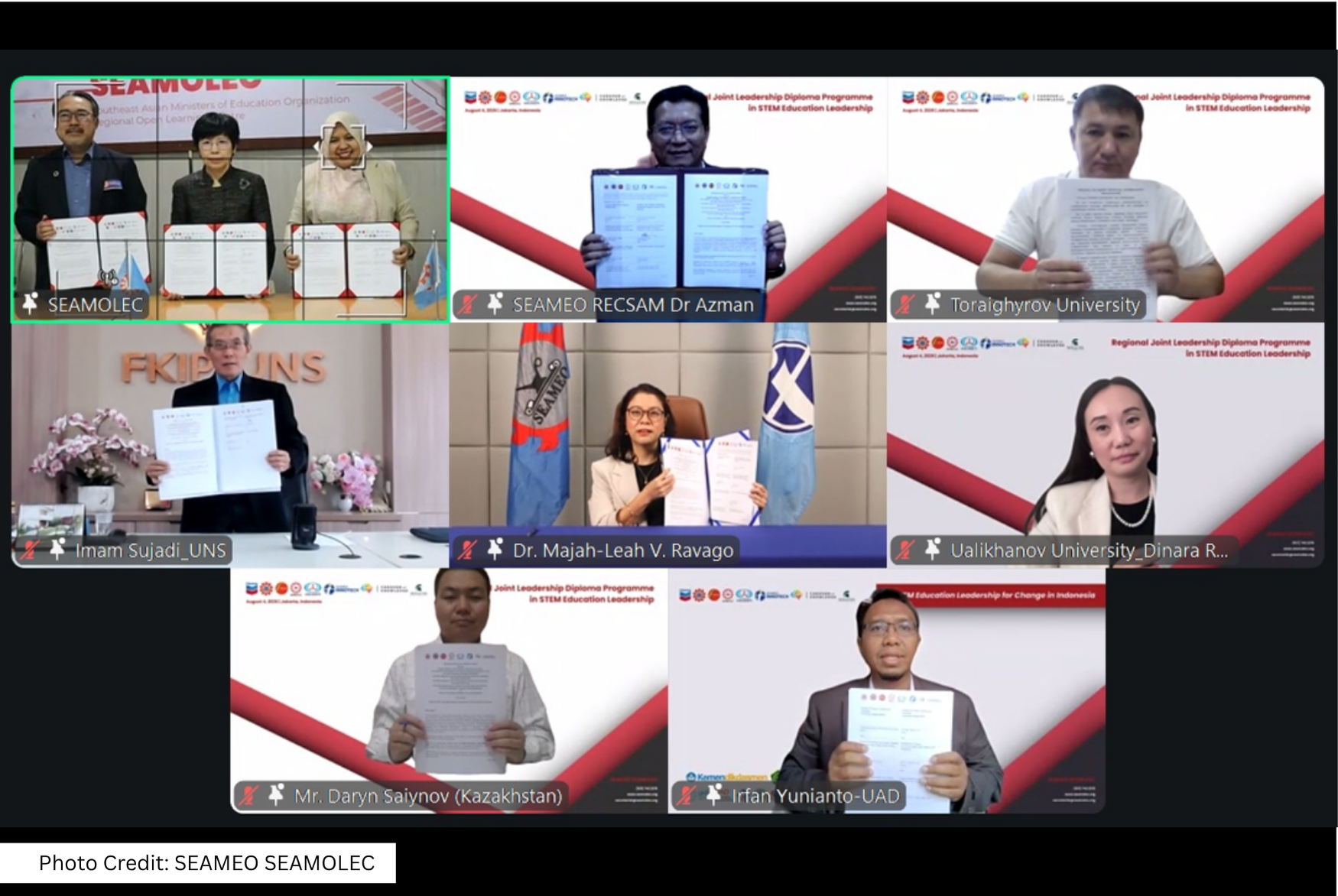
That ambition took a significant step forward on 4 August, when SEAMEO STEM-ED in partnership with SEAMEO SEAMOLEC hosted a hybrid MoU signing ceremony for the Regional Joint Leadership Diploma Programme in STEM Education Leadership. The signing took place in Jakarta during the training roll-out workshop for the Chevron-funded collaborative STEM Education Leadership for Change Programme.
The event brought together regional partners and marked an important development in the STEM Education Leadership for Change (SELC) initiative. Through the MoU, participating institutions formalised a framework for cooperation in STEM education leadership development, academic exchange, capacity building, collaborative research and regional educational programmes.
The MoU was signed by NIDA Thailand, SEAMEO STEM-ED, SEAMEO INNOTECH, SEAMEO RECSAM, SEAMEO SEAMOLEC, and Caravan of Knowledge in partnership with several academic institutions. These include Universitas Ahmad Dahlan, Universitas Sebelas Maret, Universitas Islam Negeri Raden Fatah Palembang, and Universitas Pelita Harapan from Indonesia; Ualikhanov University and Toraighyrov University from Kazakhstan; and the College of Alternative and Lifelong Learning (CALL) at Philippine Normal University.
For SEAMEO STEM-ED, the partnership forms part of a broader effort to develop education leaders who can lead STEM transformation within their schools and systems.
The signing was followed by a strategic dialogue on the Higher Graduate Diploma in School Leadership for Change (HGD-SLC), a 24-credit non-degree postgraduate programme developed by NIDA and regional partners. Rather than focusing only on academic knowledge, the programme takes a practice-based and coach-supported approach, asking participants to identify challenges within their schools, design improvement initiatives, put them into practice and evaluate their impact.
The discussions also highlighted the importance of adapting the programme to national and local contexts. Participating institutions will continue internal consultations to explore implementation opportunities, with further discussions expected to shape the next stage of the programme.
SEAMEO STEM-ED appreciates the support of SEAMEO SEAMOLEC in hosting the signing event and facilitating the discussions, helping bring regional partners together around a shared commitment to educational leadership.
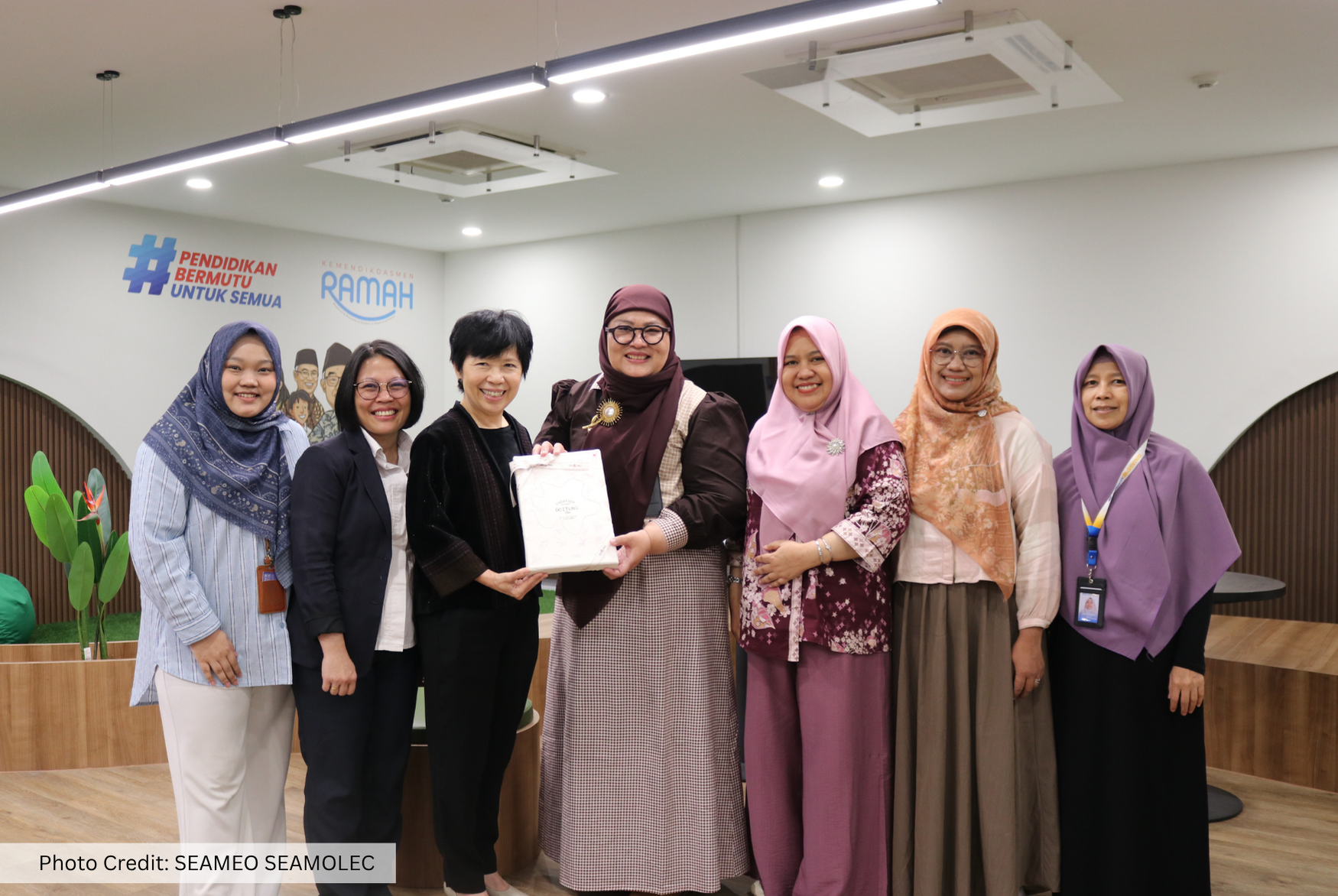
The conversation then moved from regional partnership to Indonesia's national STEM priorities. On 5 August, discussions with Prof Maila Dinia Husni Rahiem, M.A., Ph.D., Special Advisor to the Minister of Primary and Secondary Education for STEM Development, and representatives from relevant directorates provided an opportunity to explore how the SELC Programme could support Indonesia's efforts to strengthen STEM education and educational leadership.
Dr Kessara presented SELC as a regional roadmap for building the capacity of school principals, supervisors, policymakers and other education leaders to lead transformative STEM learning. The initiative builds on the experience of the Southeast Asian Teacher Education Programme (SEA-TEP), extending its focus from strengthening teachers to developing the leaders who can help create the conditions for sustained change across schools and education systems.
The discussion also connected STEM education with emerging international priorities. Participants considered the competencies highlighted through PISA 2025 and PISA 2029, including science-related competencies as well as climate literacy, media literacy and AI literacy. These areas reflect the growing need for learners to understand complex challenges, think critically and use technology responsibly.
The meeting also opened discussion on how STEM learning resources could reach teachers and students at greater scale. Participants explored the potential of Indonesia's Rumah Pendidikan digital learning platform to support the dissemination of STEM learning materials, alongside the use of model schools as potential sites for piloting and refining educational resources and practices.
SEAMEO SEAMOLEC shared its experience in developing and contextualising STEM learning materials, including resources related to climate change education. The discussion emphasised that effective regional resources need to reflect local contexts and provide teachers with practical ways to bring STEM learning into the classroom.
These conversations reinforced the potential for regional expertise and national education priorities to complement one another, creating pathways for STEM initiatives to move from individual projects towards wider educational impact.
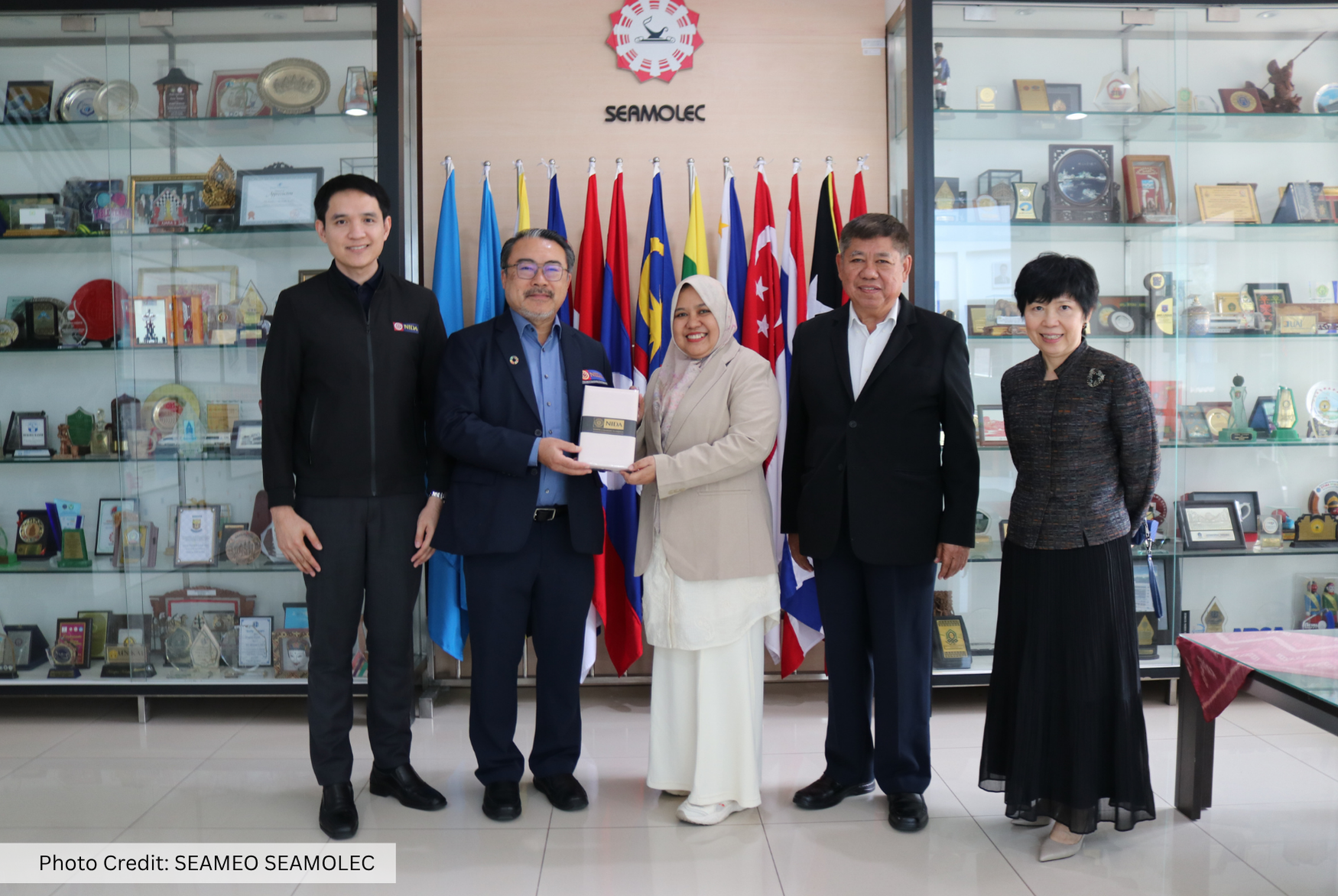
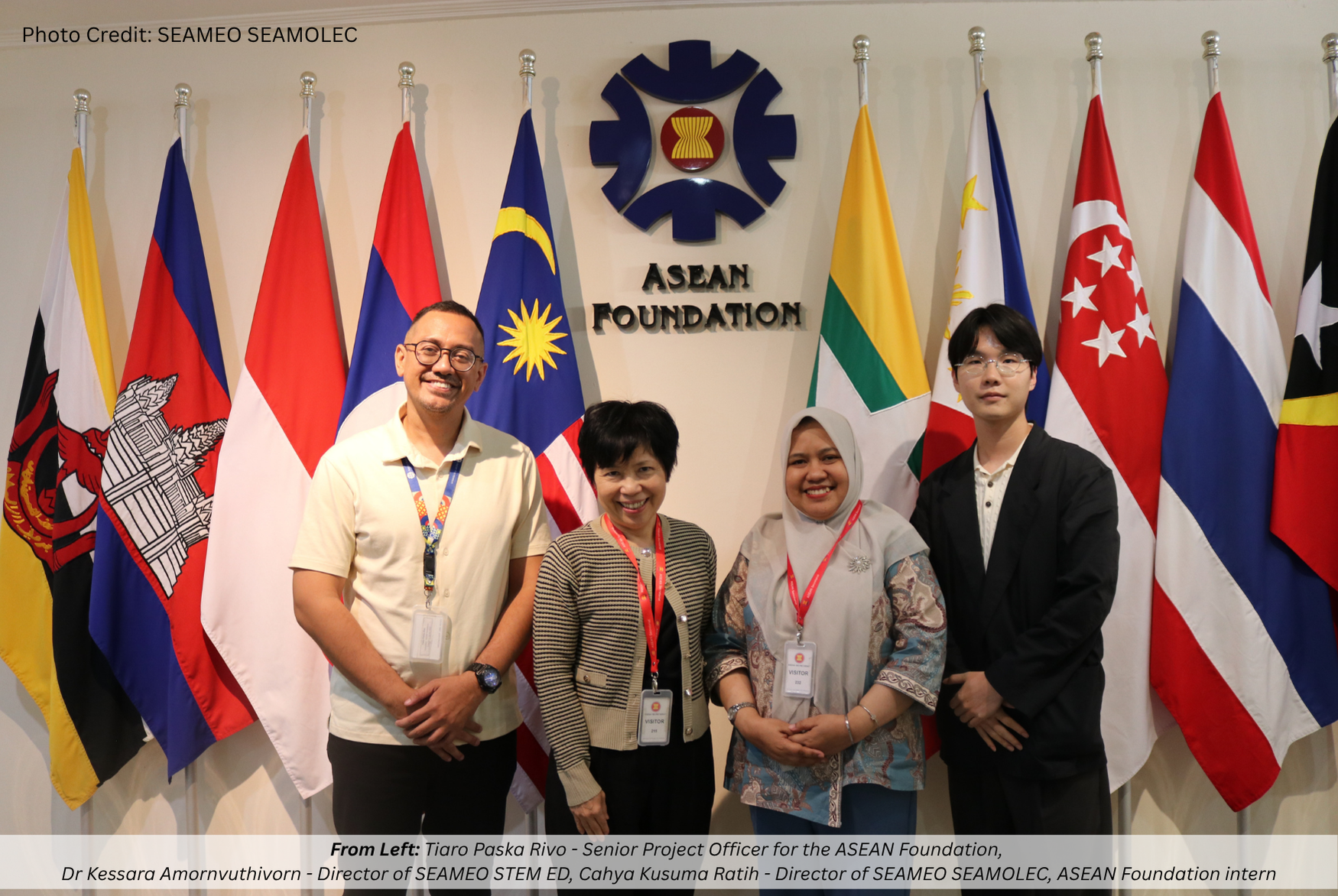
The mission's regional perspective expanded further on 6 August, when SEAMEO STEM-ED and SEAMEO SEAMOLEC met with the ASEAN Foundation to explore potential areas of collaboration in STEM education, AI literacy, educational leadership and regional capacity development. The discussion brought together Ilan Asqolani, Head of Programme, and Tiaro Paska Rivo, Senior Project Officer, from the ASEAN Foundation; Dr Kessara Amornvuthivorn, Director of SEAMEO STEM-ED; and Cahya Kusuma Ratih, Director of SEAMEO SEAMOLEC, alongside other representatives. It also provided an opportunity for Dr Kessara to share the experience and regional reach of SEA-TEP, which trained more than 1,800 educators and reached approximately 2,400 beneficiaries, including school supervisors and education leaders, across Cambodia, Indonesia, Kazakhstan, Malaysia and Thailand between 2023 and 2025.
Through SEA-TEP, teachers were introduced to approaches such as Claim-Evidence-Reasoning (CER) and scientific modelling using digital tools including SageModeler and CODAP. These approaches supported evidence-based reasoning and helped educators and learners explore complex systems, including issues related to environmental sustainability and climate change.
The experience also provided a foundation for SELC, which broadens the focus to school leaders, educational administrators and policymakers. This evolution reflects a central principle of STEM-ED's work: lasting improvement in STEM education requires not only capable teachers, but also leaders who can create the conditions for innovation and sustained change.
The ASEAN Foundation saw potential alignment between this work and its own regional priorities, particularly in Education and Environment. Discussions also explored opportunities around AI literacy, including possible connections with the Foundation's AI Ready ASEAN initiative, as well as the localisation and contextualisation of high-quality open-source learning resources.
Rather than simply translating existing materials, the proposed approach would adapt learning resources to local educational contexts and support their use through classroom-based teaching demonstrations. The partners also recognised the importance of ensuring that regional initiatives reach communities and countries that may have fewer opportunities to access high-quality STEM education resources, including the CLMV countries.
The consultation marked a first step towards potential collaboration between the organisations. As a follow-up, SEAMEO STEM-ED will prepare a concept note outlining potential areas for collaboration, including leadership development and learning resource localisation, for further discussion with the ASEAN Foundation.
Over five days in Indonesia, the mission moved across different levels of the education ecosystem: from regional partnerships and leadership development, to national STEM priorities, and finally to broader ASEAN collaboration.
The engagements brought together regional expertise, national education priorities and opportunities for broader ASEAN collaboration. Together, they reinforced the importance of strengthening educational leadership, expanding access to quality STEM learning, and preparing education systems and learners for emerging challenges.
SEAMEO STEM-ED looks forward to building on these partnerships with NIDA, SEAMEO SEAMOLEC, Indonesian institutions, government partners and the ASEAN Foundation to advance STEM education and future-ready learning across the region. The Centre extends its appreciation to SEAMEO SEAMOLEC and all partners for their collaboration and support.
Also on our social media platforms:
Facebook: https://www.facebook.com/share/p/1DKbFcfkYH/
LinkedIn: https://www.linkedin.com/feed/update/urn:li:activity:7495419276762259457