Computational Thinking (CT) is increasingly recognised as a foundational competency for the AI era and for future workforce development. It enables learners to analyse problems, recognise patterns, decompose complex tasks, develop algorithms, and design systematic solutions. However, many schools across Southeast Asia continue to face challenges in integrating CT into classroom practice, particularly due to unequal access to digital technologies and limited opportunities for teacher preparation.
To address these challenges, SEAMEO STEM-ED and its partners developed the Guidebook for Unplugged Computational Thinking, designed specifically for primary education. The guidebook demonstrates how foundational CT concepts can be introduced through accessible, low-cost and non-digital activities, enabling children to develop computational ways of thinking regardless of their access to computers or the internet.
Importantly, the guidebook views Computational Thinking not as an isolated skill, but as a way of thinking that connects with Mathematical Thinking and STEM Thinking. Mathematical Thinking helps learners identify patterns, explore relationships, reason with different representations and develop logical and quantitative understanding. STEM Thinking extends these capabilities into inquiry, design, problem-solving and creation, enabling learners to apply computational and mathematical ideas to investigate phenomena and develop solutions to real-world problems.
In this way, the guidebook supports a progression from thinking and reasoning to applying and creating:

Beginning in 2023, SEAMEO Regional Centres and international partners collaborated to develop and pilot the learning resources through classroom demonstrations, teacher reflection and the Lesson Study approach. Pilot activities were conducted in Thailand, Malaysia and Indonesia, followed by research, reflection and refinement. The resulting guidebook was launched at the 17th APEC-Tsukuba Conference in April 2024.
Implementation subsequently expanded to Lao PDR and the Philippines in 2025, while further classroom observations and demonstrations were presented through the 14th SEAMEO–University of Tsukuba Symposium in 2026.
The unplugged approach is inherently inclusive. By minimising dependence on digital infrastructure, it enables learners—including those in rural, remote and underserved communities—to engage in meaningful Computational Thinking activities using familiar, low-cost materials.
The guidebook focuses on developing foundational capabilities related to algorithmic thinking, computational modelling, logical reasoning, mathematical cognition and STEM inquiry. These foundations are important for learners’ future engagement with programming, informatics, artificial intelligence and machine learning, while remaining developmentally appropriate for primary education.
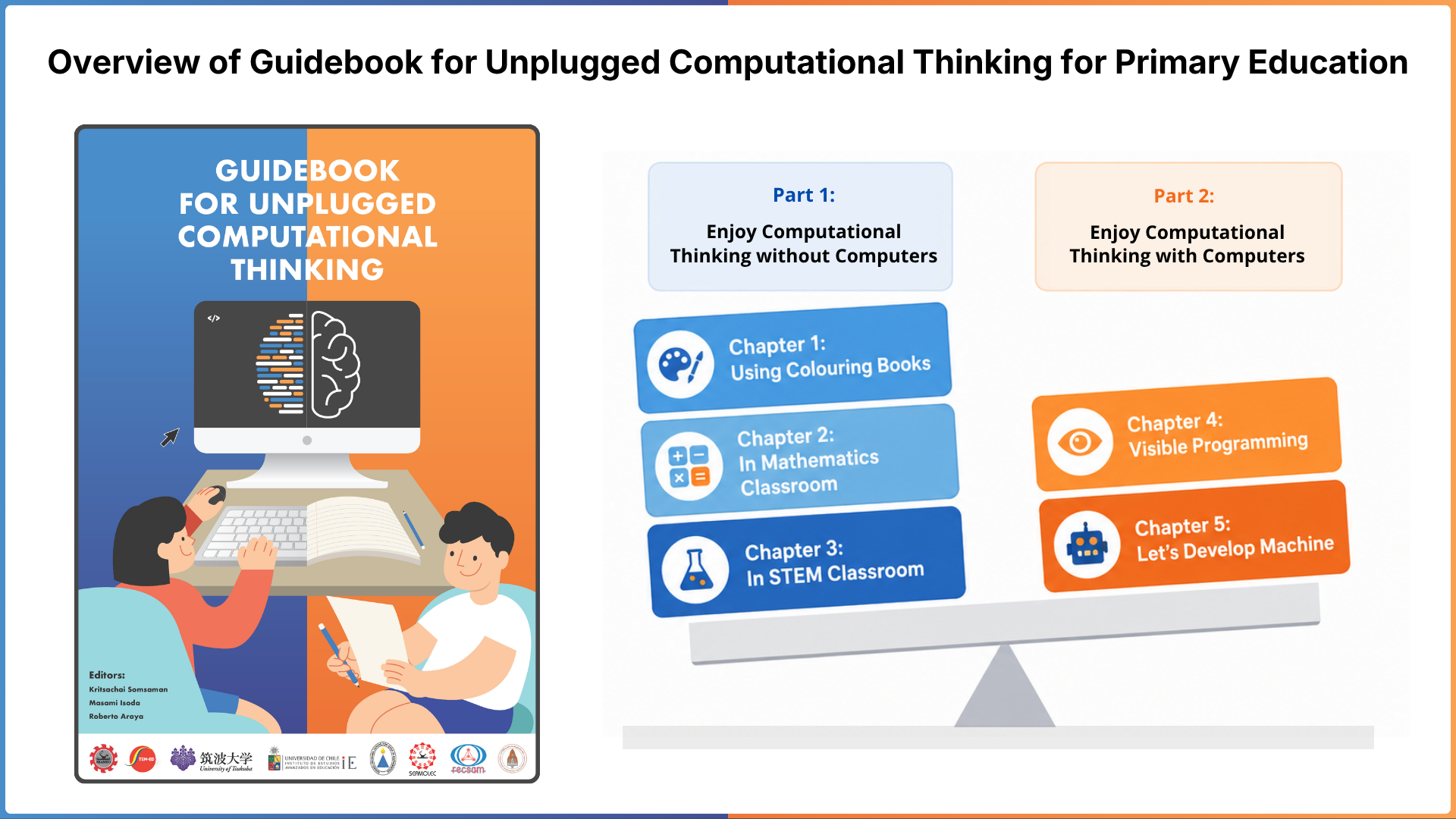
The guidebook is organised into two comprehensive parts comprising five specialised chapters, combining conceptual foundations with practical classroom activities that teachers can adapt to their local languages, curricula and learning contexts.
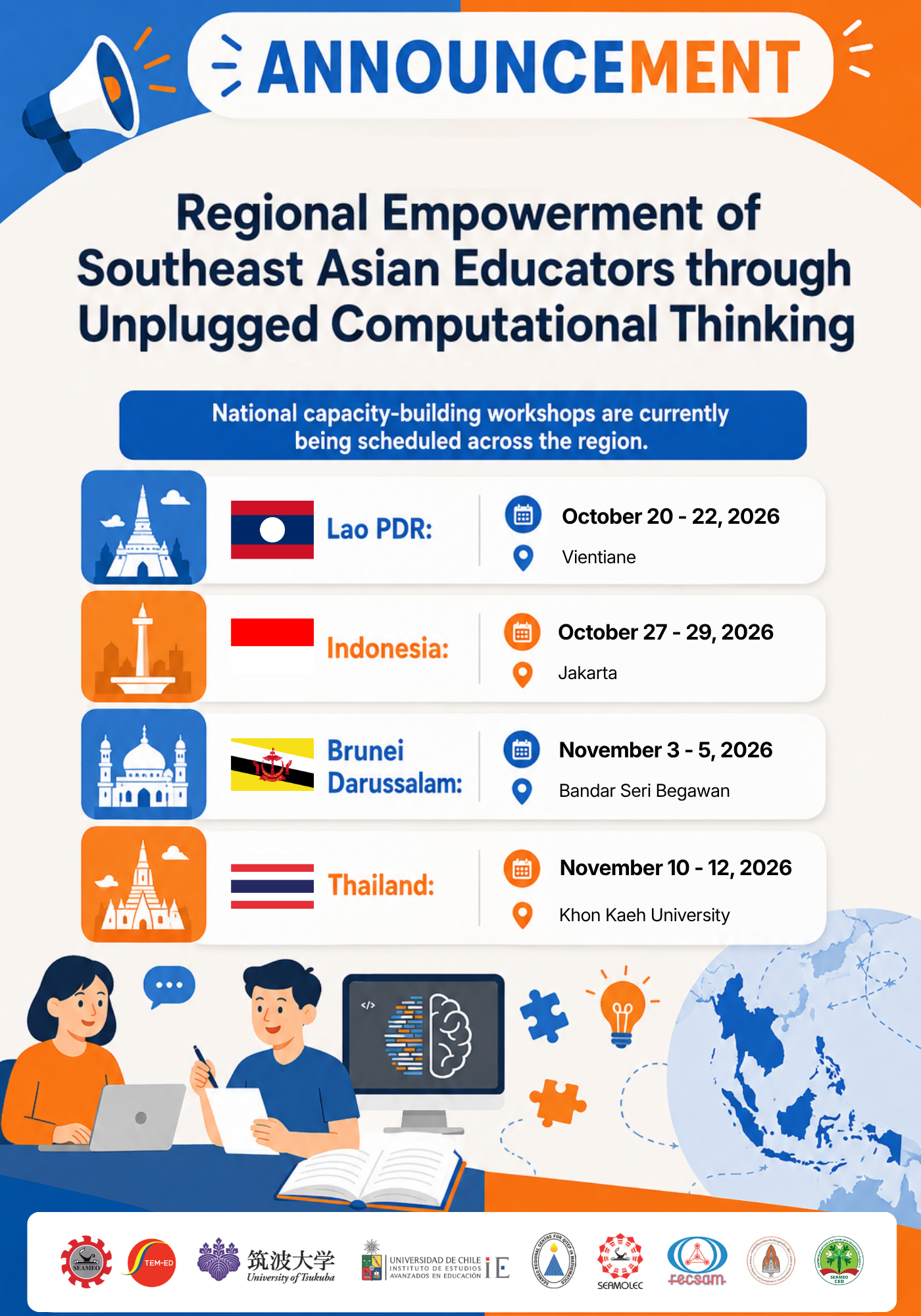
The primary goal of this initiative is to promote equitable access to computational thinking education across Southeast Asia by localising and implementing the Unplugged Computational Thinking Guidebook. It is therefore not intended to be a fixed teaching package. It is a flexible and evolving regional resource, strengthened through teachers’ experiences, classroom research and local innovation.
Specific objectives include:
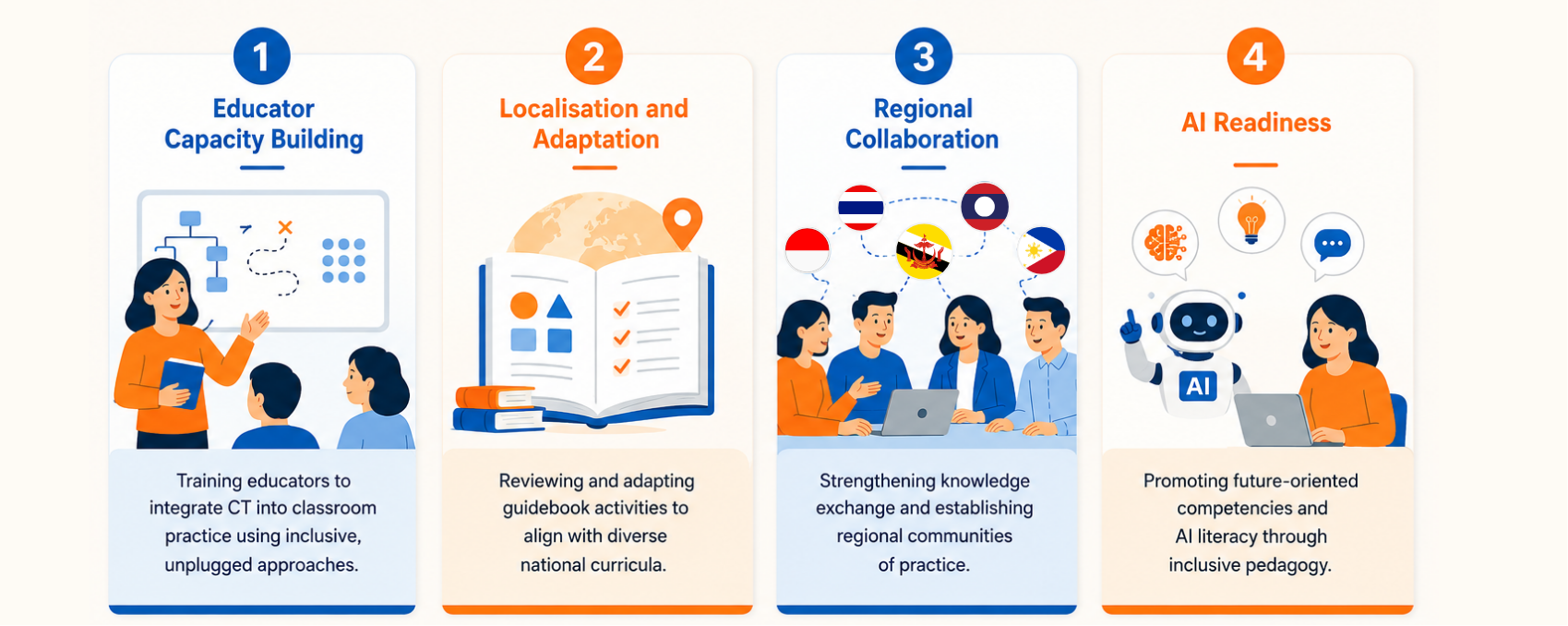
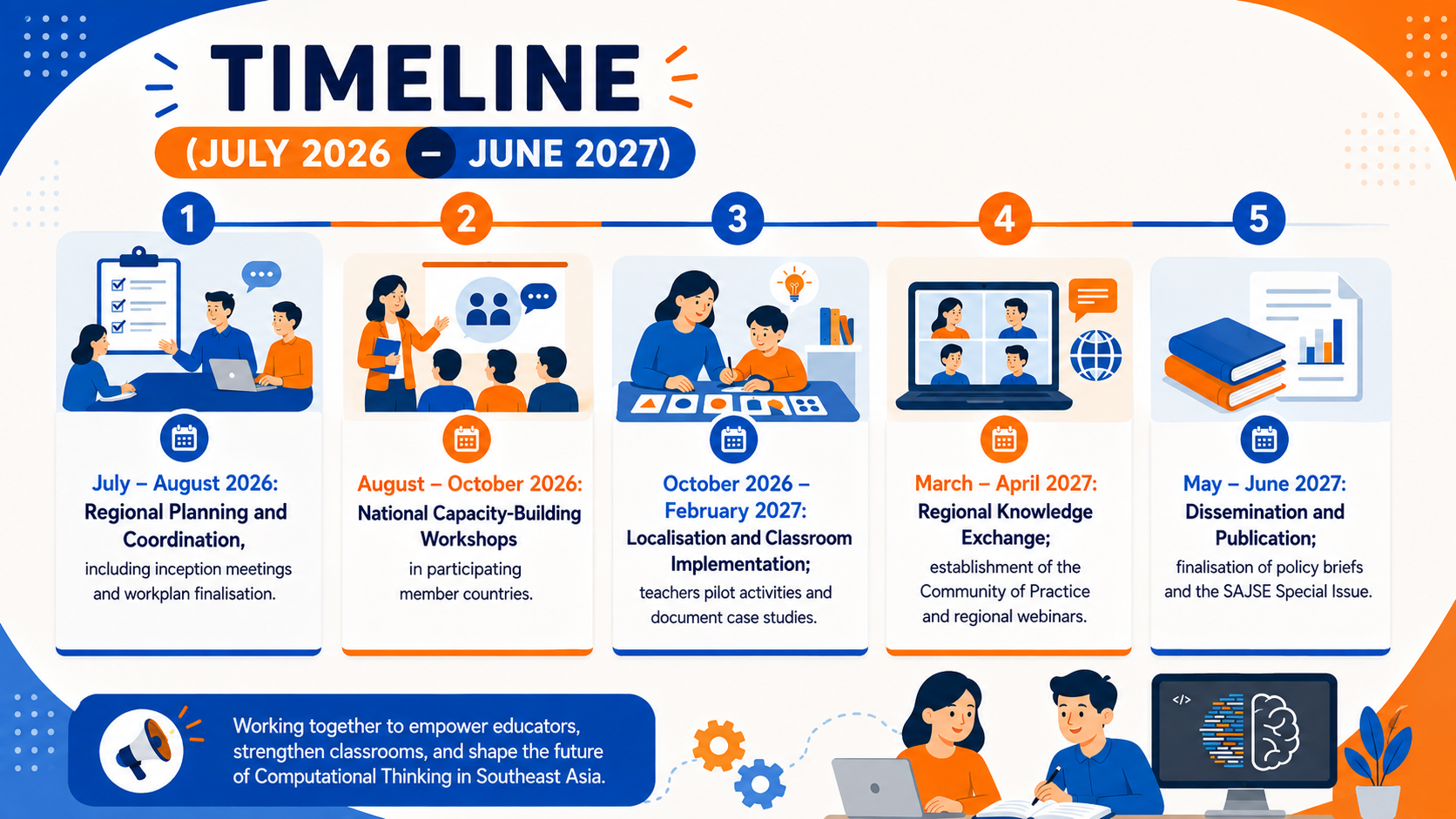
The project aims to reach 150–200 educators directly, resulting in country-specific lesson plans and enhanced policy awareness regarding CT integration.
A central principle of the initiative is localisation. Participating SEAMEO Centres and partners are encouraged to translate and adapt the materials to their local languages, curricula, cultures and classroom contexts.