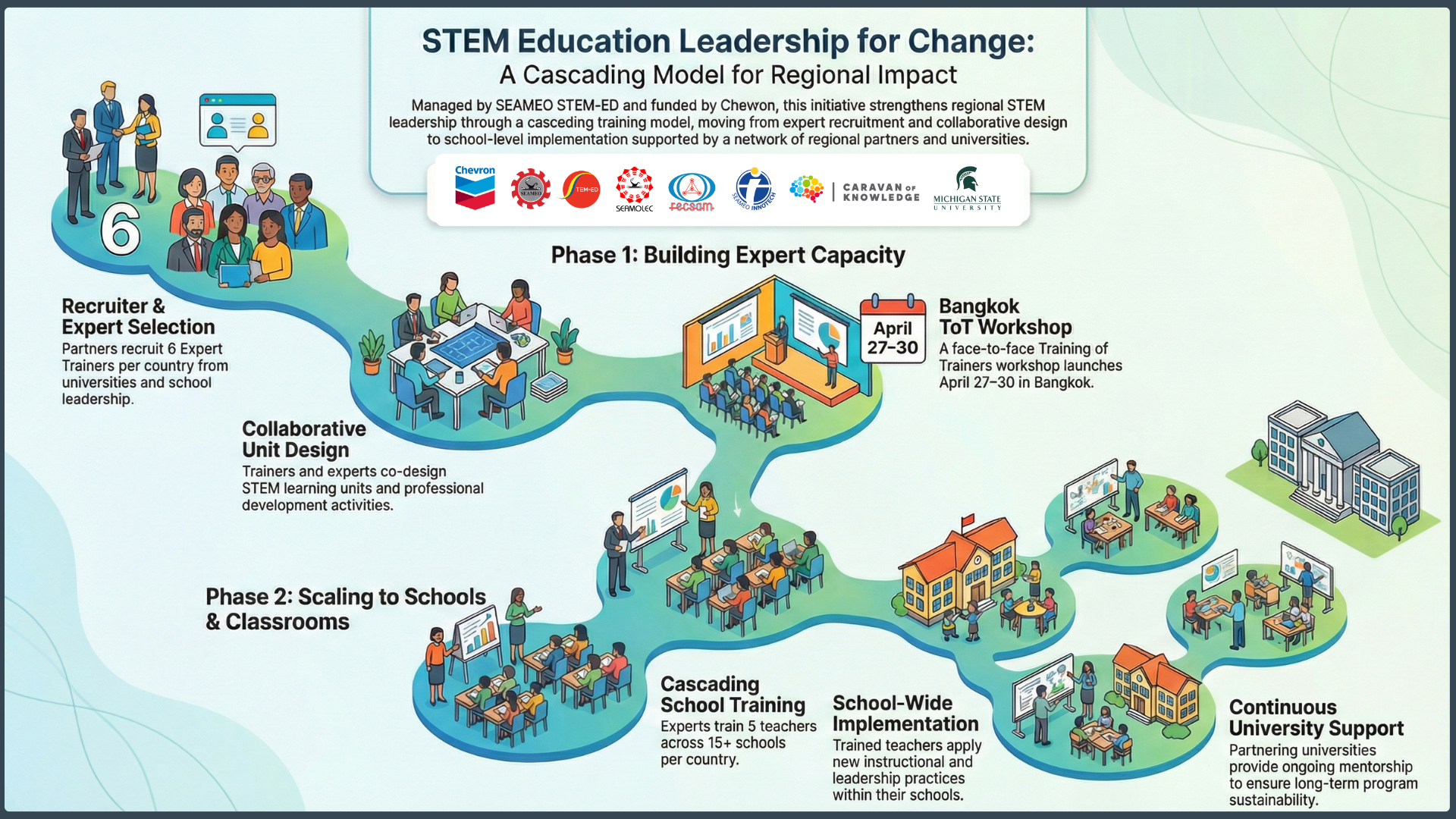
Lasting STEM educational transformation requires more than strong classroom practices—it depends on effective leadership, institutional support, and strategic partnerships. Building on the lessons and insights from the SEA-TEP project, SEAMEO STEM-ED launched the Chevron-supported STEM Education Leadership for Change Programme (SELC) in November 2025.
The initiative brings together a regional network of STEM education leaders from SEAMEO STEM-ED (Thailand), SEAMOLEC (Indonesia), RECSAM (Malaysia), INNOTECH (Philippines), and Caravan of Knowledge (Kazakhstan), working alongside Michigan State University, national agencies, universities, and private-sector partners to strengthen the capacity of policymakers, education leaders, and school administrators to drive STEM-focused school improvement.
By aligning teacher professional development with PISA, NGSS-aligned Claim-Evidence-Reasoning (CER) and modelling approaches, and leadership development with quality assurance, the programme seeks to create enabling environments where teachers are empowered, innovation is sustained, and students develop the critical thinking, problem-solving, and reasoning skills needed to thrive as responsible global citizens.
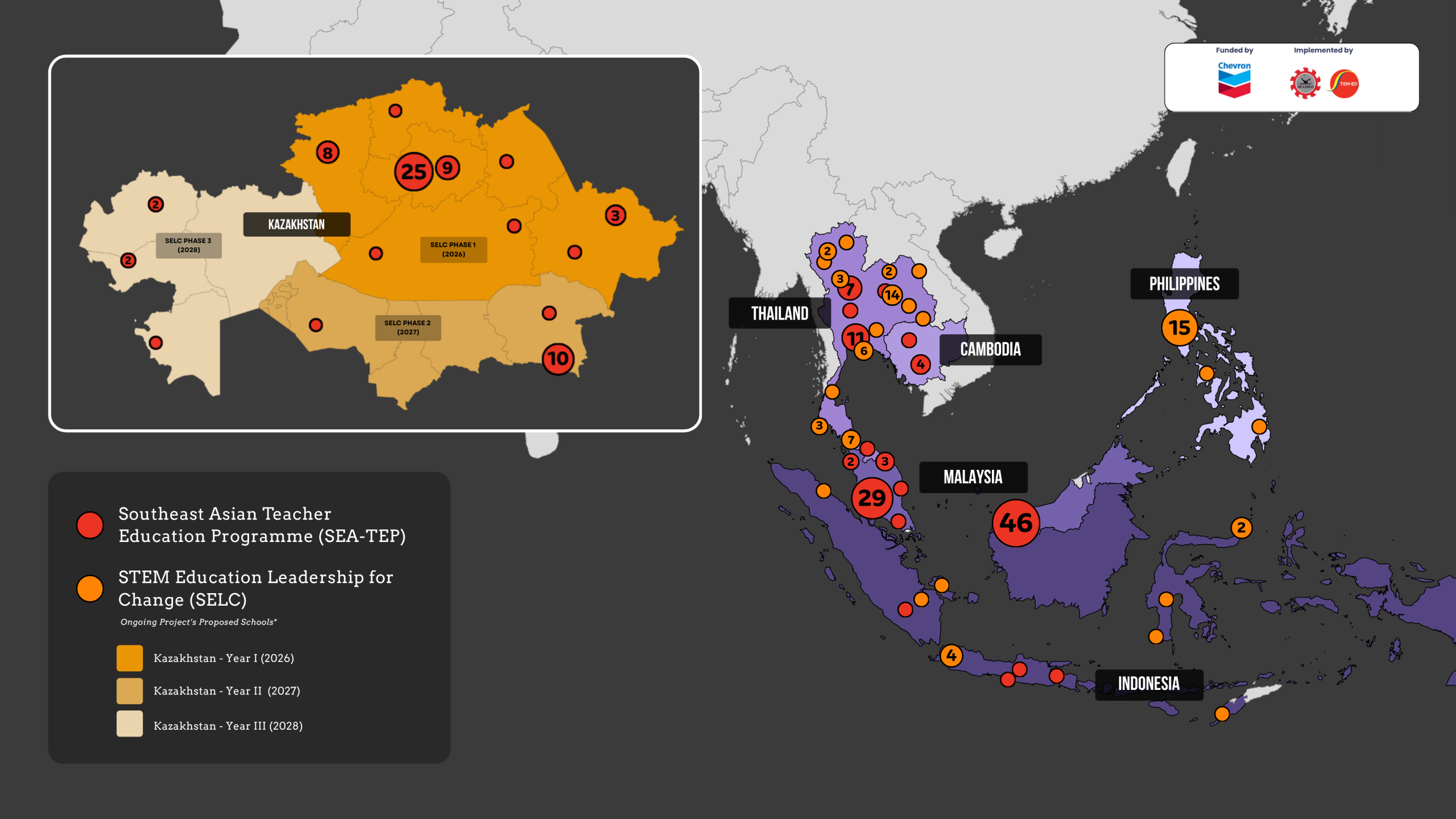
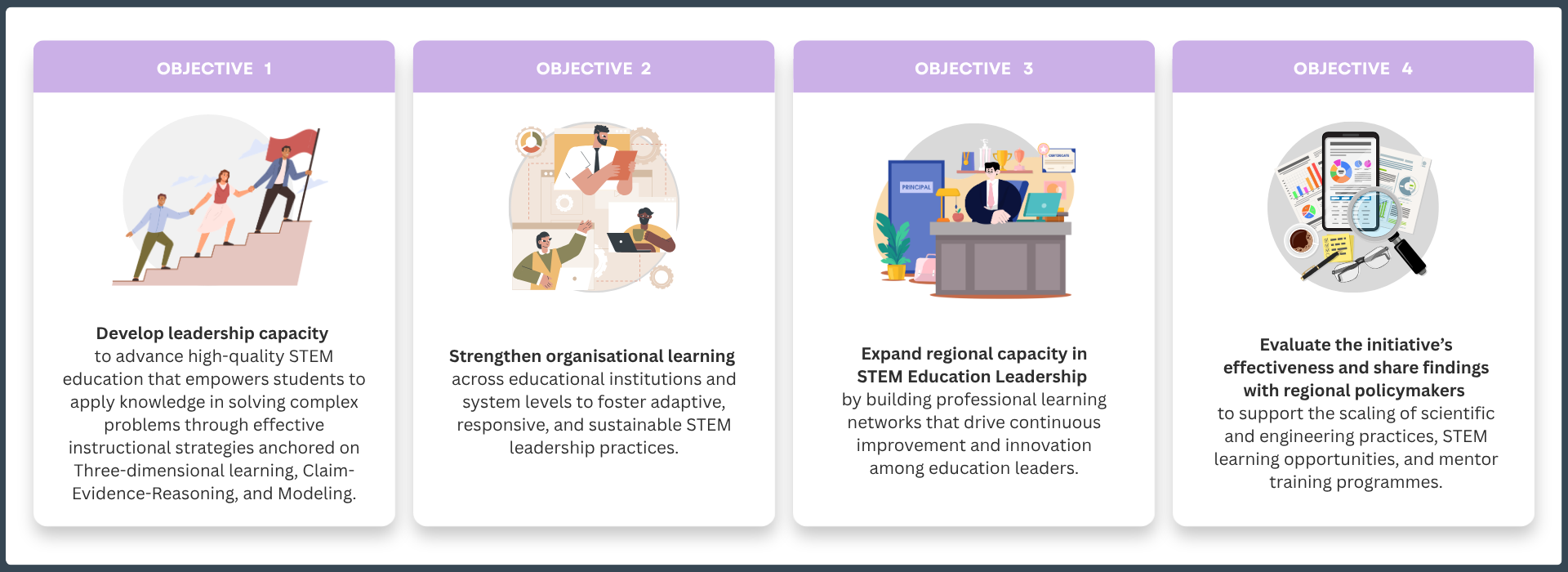
School leaders play a pivotal role in driving professional development and elevating educational outcomes. The STEM Education Leadership for Change Programme aims to strengthen leadership capacity among policymakers, administrators, and school leaders to advance STEM education across Southeast Asia and Kazakhstan.
Building on the experience of SEA-TEP, the programme continues to empower teachers to adopt high-quality learning units and evidence-based instructional practices aligned with the PISA framework—enhancing students’ critical thinking and problem-solving skills. Through shared resources, hybrid training models, and strategic advocacy, the initiative fosters inclusive, innovative, and sustainable STEM advancement using a whole-school approach.
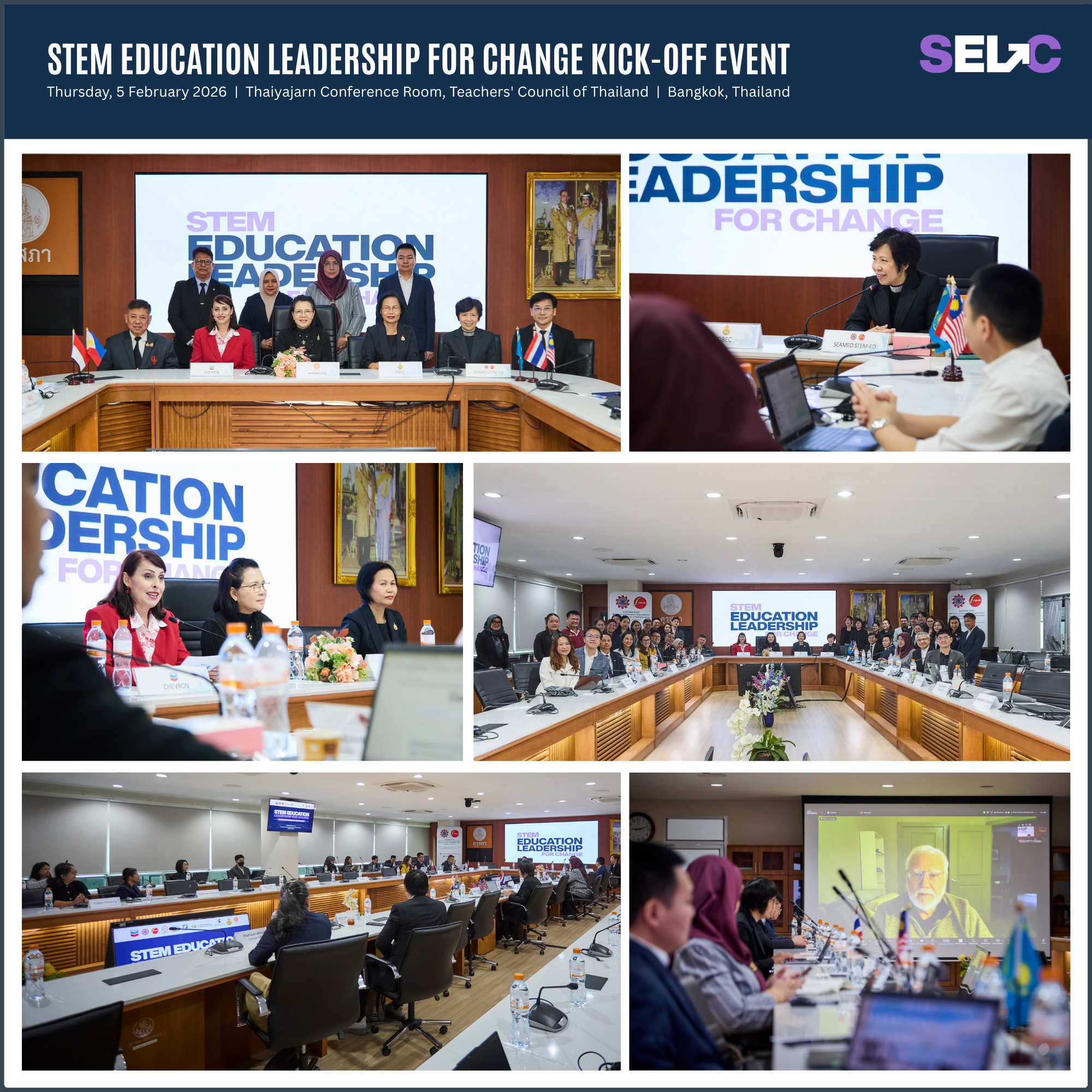
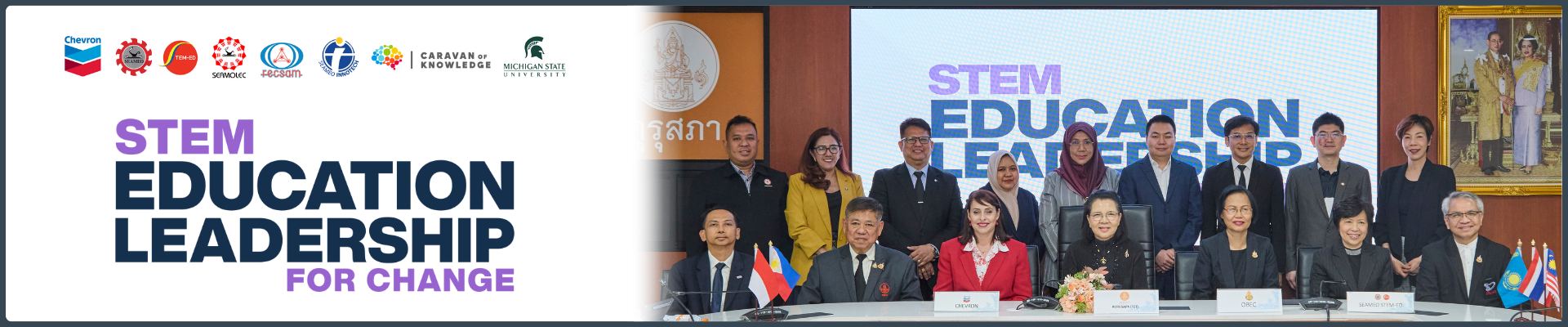
The programme was formally launched through the successful Regional Kick-off Meeting, convening senior representatives from the Teachers' Council of Thailand (TCT), the Institute for the Promotion of Teaching Science and Technology (IPST), the Office for National Education Standards and Quality Assessment (ONESQA), the Office of the Basic Education Commission (OBEC), Chevron, Michigan State University, SEAMEO Centres, universities, and partner institutions from Thailand, Indonesia, Kazakhstan, Malaysia, and the Philippines.
The event featured a keynote presentation by Prof. Joseph Krajcik of Michigan State University on developing usable knowledge through phenomenon-based STEM learning, alongside a regional teacher-sharing webinar where educators showcased promising practices in Claim-Evidence-Reasoning (CER), scientific modelling, and inquiry-based STEM teaching during their participation in the SEA-TEP programme from each of the participating countries.
Together, these sessions set the foundation for regional collaboration and the programme's implementation.
The Kick-off Meeting also initiated the collaborative development of climate-focused STEM learning units, instructional leadership modules, and a shared research and evaluation framework to guide implementation across participating countries. These early engagements established a common direction for the programme and strengthened partnerships among regional institutions, laying the groundwork for the next phase of capacity building through the Training-of-Trainers (ToT) programme.

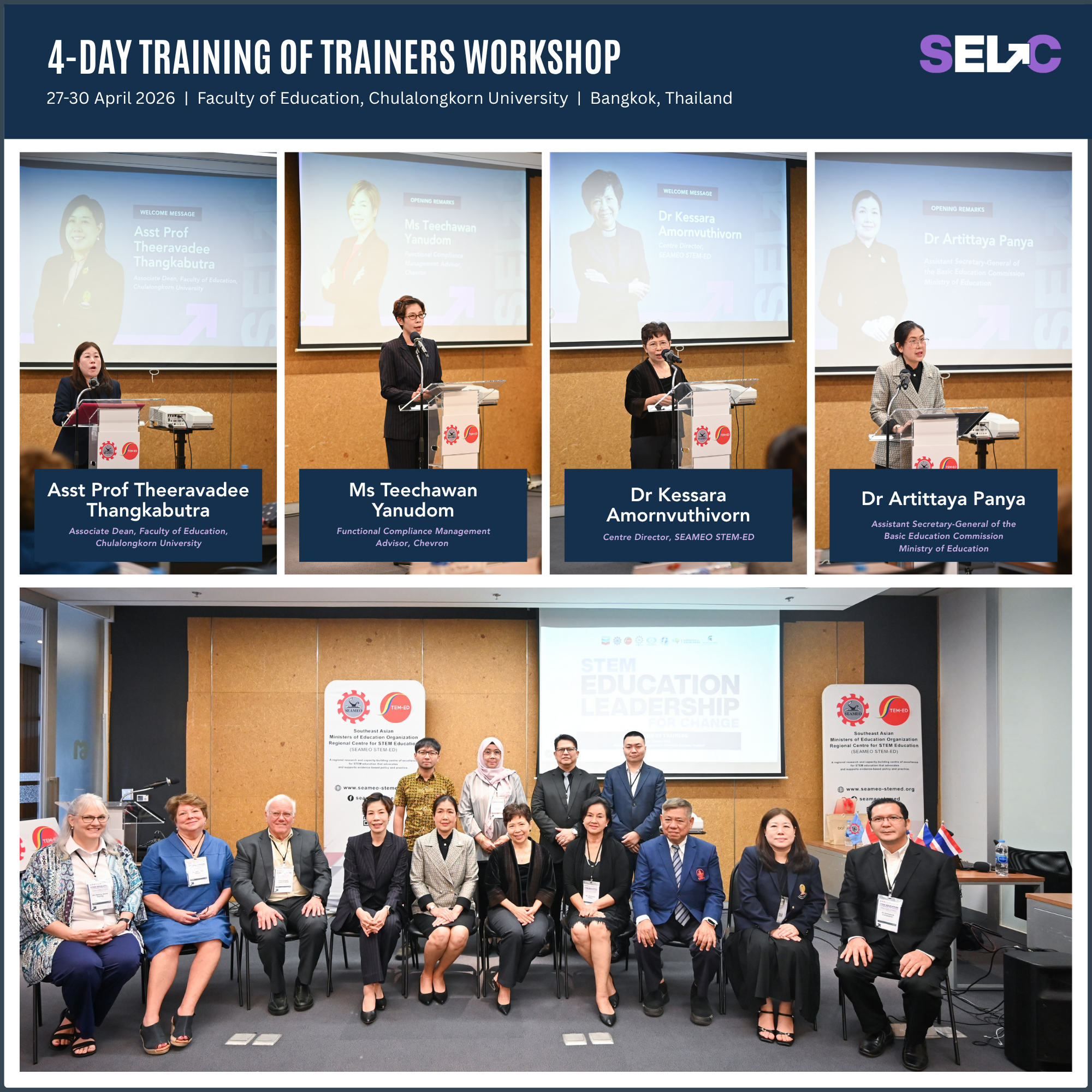
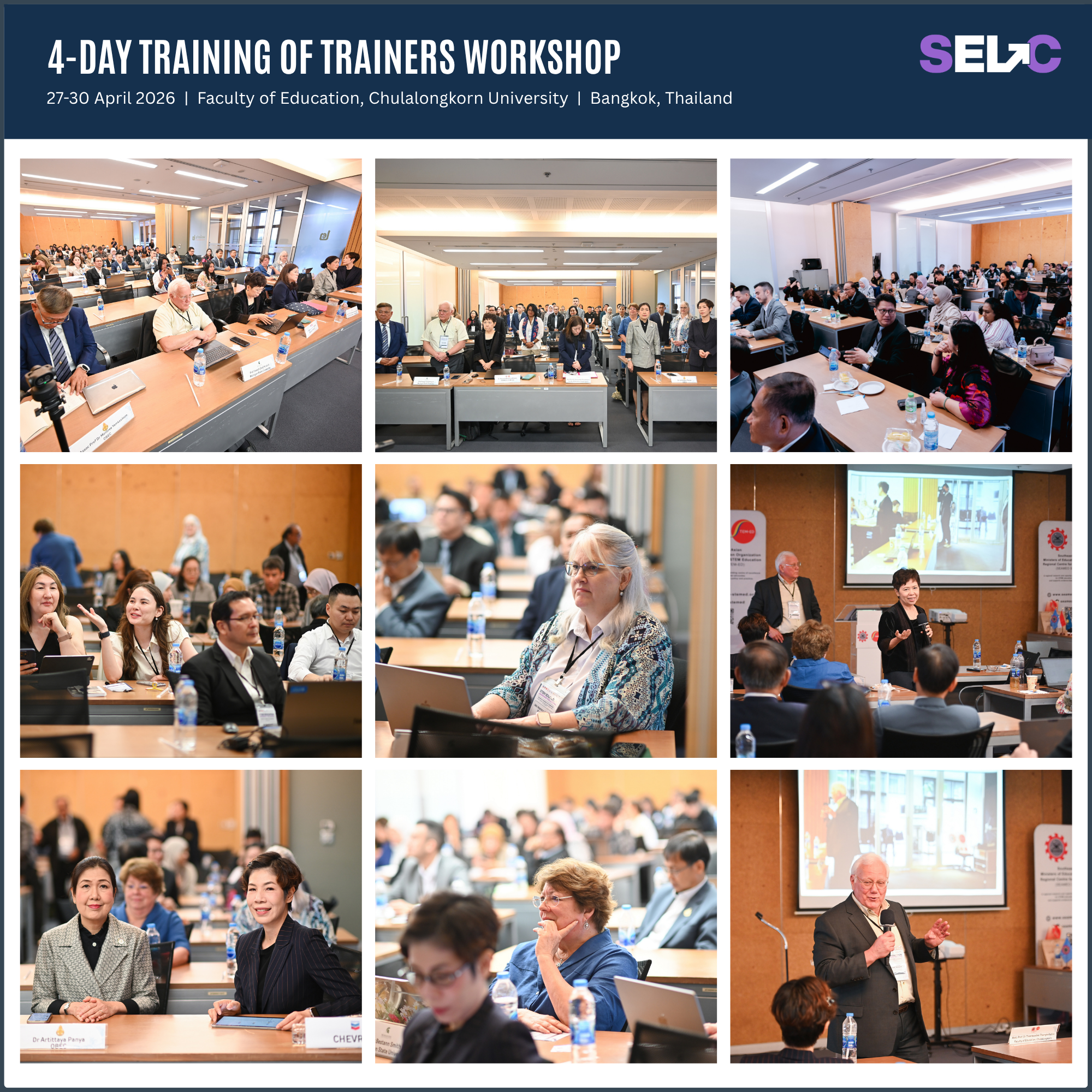
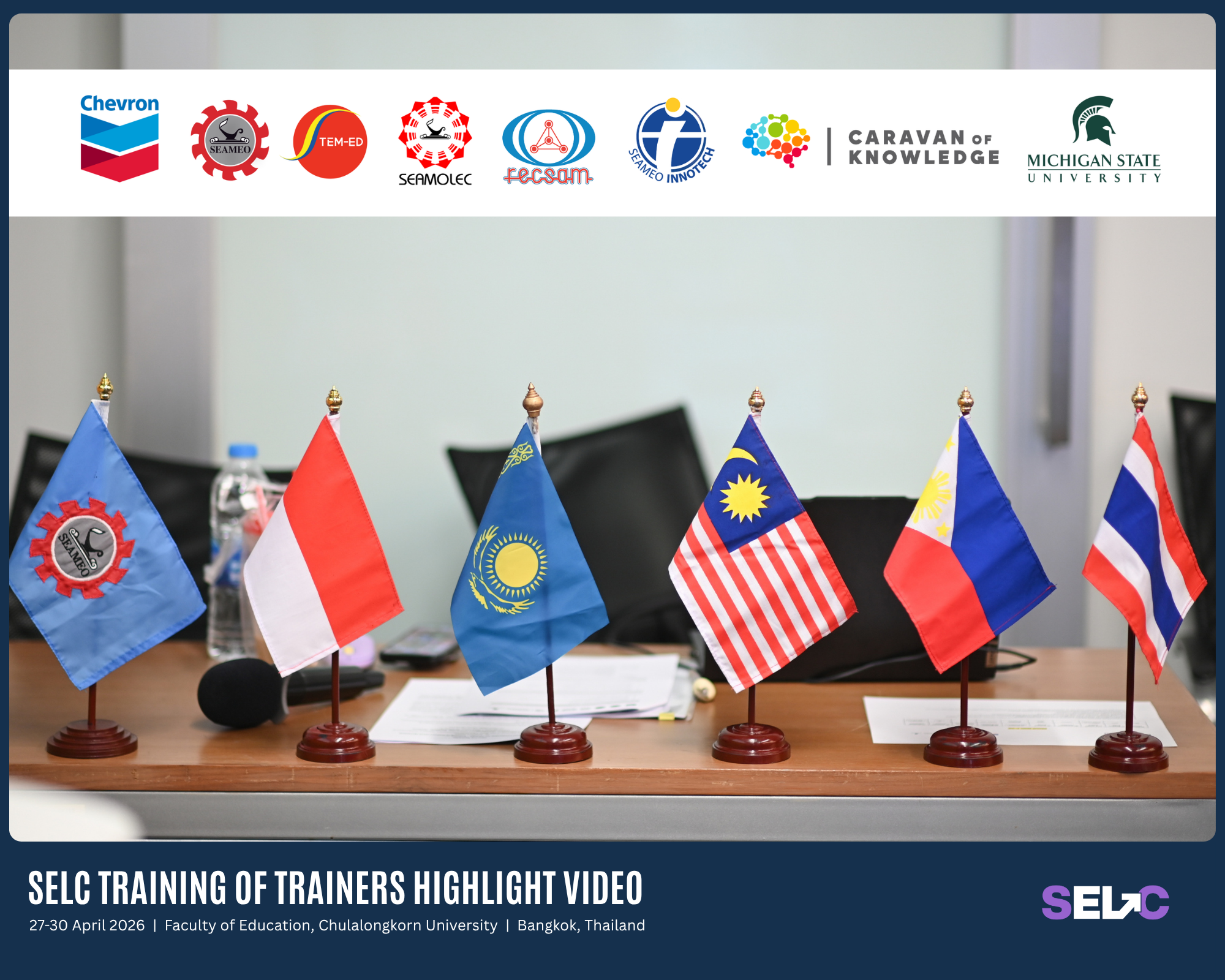
Building on the momentum of the Regional Kick-off Meeting, the Regional Training of Trainers (ToT) Workshop was held from 27–30 April 2026 at the Faculty of Education, Chulalongkorn University, Bangkok. The four-day workshop brought together expert trainers and education leaders from Indonesia, Kazakhstan, Malaysia, the Philippines, and Thailand, alongside regional partner institutions, to strengthen instructional leadership and prepare a core group of trainers to lead professional development for teachers and school leaders across the region.
Centred on Climate Education as a context for integrated STEM learning, participants engaged in collaborative lesson design, micro-teaching, and hands-on exploration of digital STEM tools, including Floaino, SageModeler, and CODAP. The workshop also supported the co-development of professional learning modules and featured plenary sessions by international experts, including Prof. Joseph Krajcik (Michigan State University), Ms. Yadana Desmond (STEM Teachers NYC), and Ms. So Chenda Samreth (UNESCO Office for Climate Education). These collaborative activities strengthened regional partnerships and established a network of expert trainers equipped to support the programme's implementation in their respective countries.


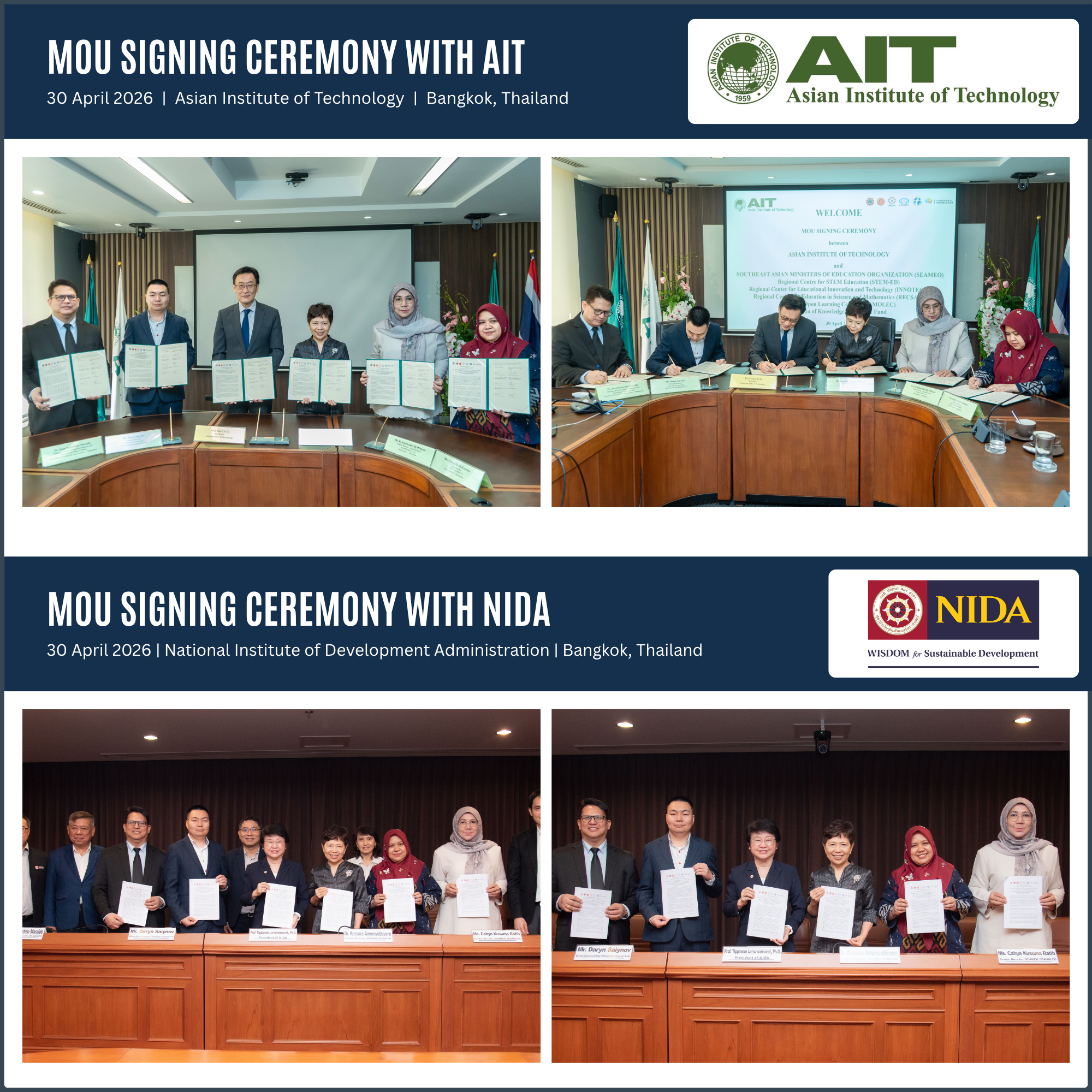
A key milestone of the programme was the signing of Memoranda of Understanding (MoUs) with the Asian Institute of Technology (AIT) and the National Institute of Development Administration (NIDA) on 30 April 2026, reinforcing a shared commitment to advancing STEM education, research, innovation, and capacity development across Southeast Asia. The signing ceremonies brought together senior representatives from AIT, NIDA, SEAMEO STEM-ED, SEAMEO regional centres, and partner organisations, reflecting the programme's growing network of strategic institutional collaborations.
These partnerships strengthen the programme's capacity to deliver high-quality professional development, collaborative research, and leadership initiatives by leveraging the expertise of leading academic institutions and regional networks. Together with SEAMEO INNOTECH, RECSAM, SEAMOLEC, Caravan of Knowledge, and other partners, the agreements establish a strong foundation for sustained regional cooperation and support the long-term implementation and impact of the STEM Education Leadership for Change (SELC) Programme.

SELC’s research component will facilitate collaborative development of research frameworks, implementation plans, and standardised instruments tailored to the context of the countries and examine how instructional leadership and support, teacher collaboration, and professional learning communities (PLCs) contribute to improved STEM teaching and learning across the region. The study will assess leaders’ instructional leadership capacity, teachers’ confidence and collective efficacy, implementation of climate-focused transdisciplinary STEM learning units, and students’ competencies relevant to real-world skills. The findings will provide valuable insights into effective strategies for sustaining, scaling, and transforming high-quality STEM education across diverse educational contexts.
As countries roll out national-level implementation, the programme is translating regional collaboration into tangible action at the school and system levels. Ultimately, SELC seeks to establish a scalable model of STEM education leadership development that empowers educators, strengthens schools, and equips learners with the competencies needed to address real-world and sustainability challenges across the region.