
Policy Dialogue Highlights | Empowering the Next Generation Through Mathematical Literacy
In an era of rapidly evolving digital transformation and artificial intelligence, how can we strengthen mathematical literacy?
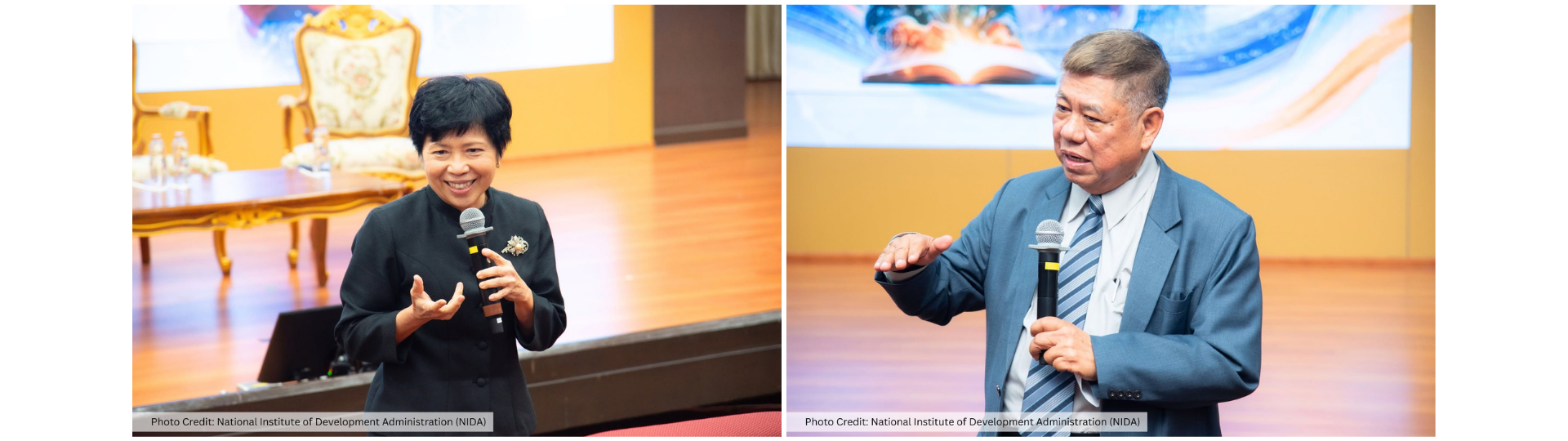
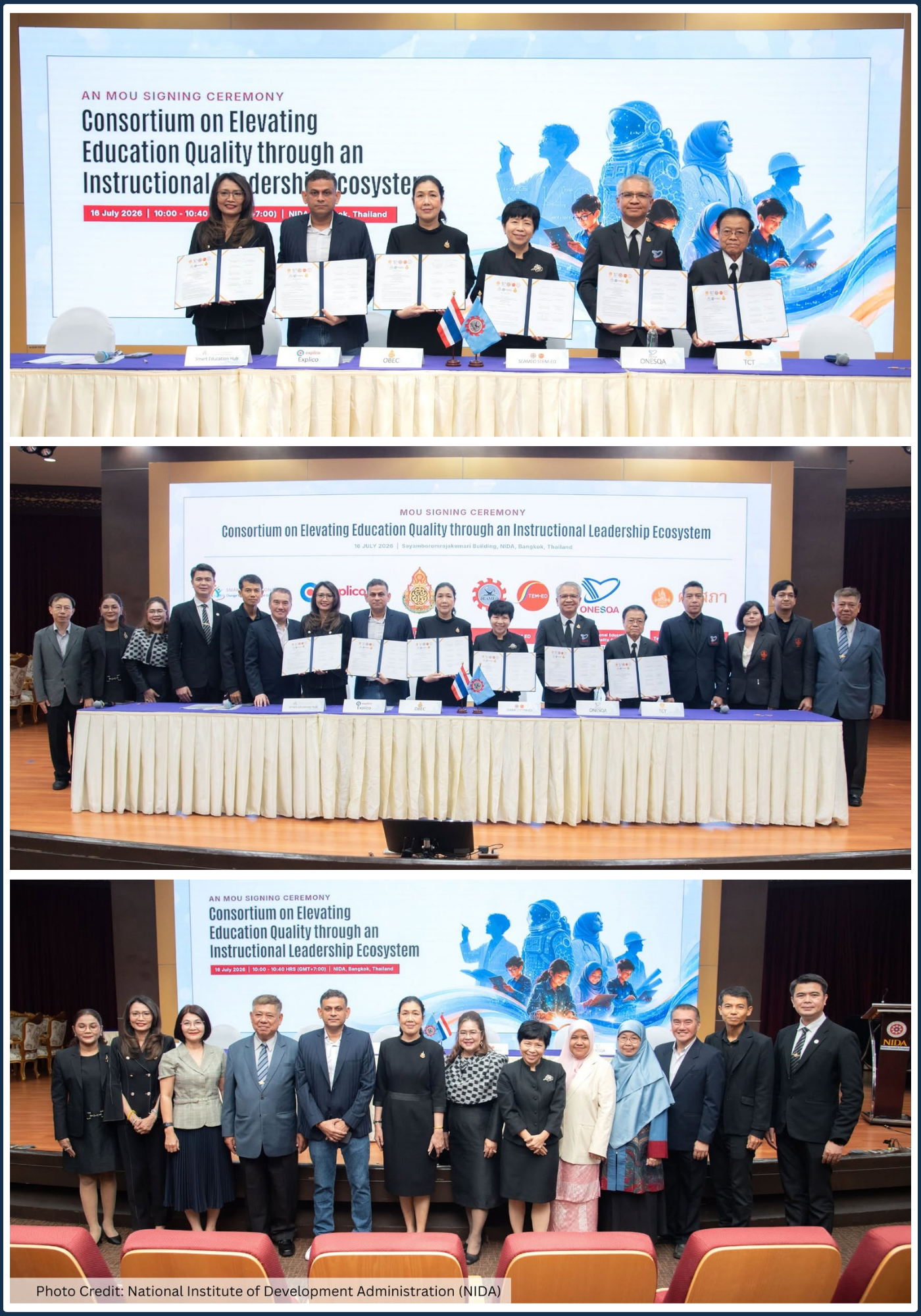
On 16 July 2026, SEAMEO STEM-ED, in collaboration with the National Institute of Development Administration (NIDA), convened the Policy Dialogue: Empowering the Next Generation Through Mathematical Literacy in Bangkok, Thailand. The event brought together policymakers, education leaders, researchers, teacher educators, development partners, universities, and education technology experts from across Southeast Asia and beyond.
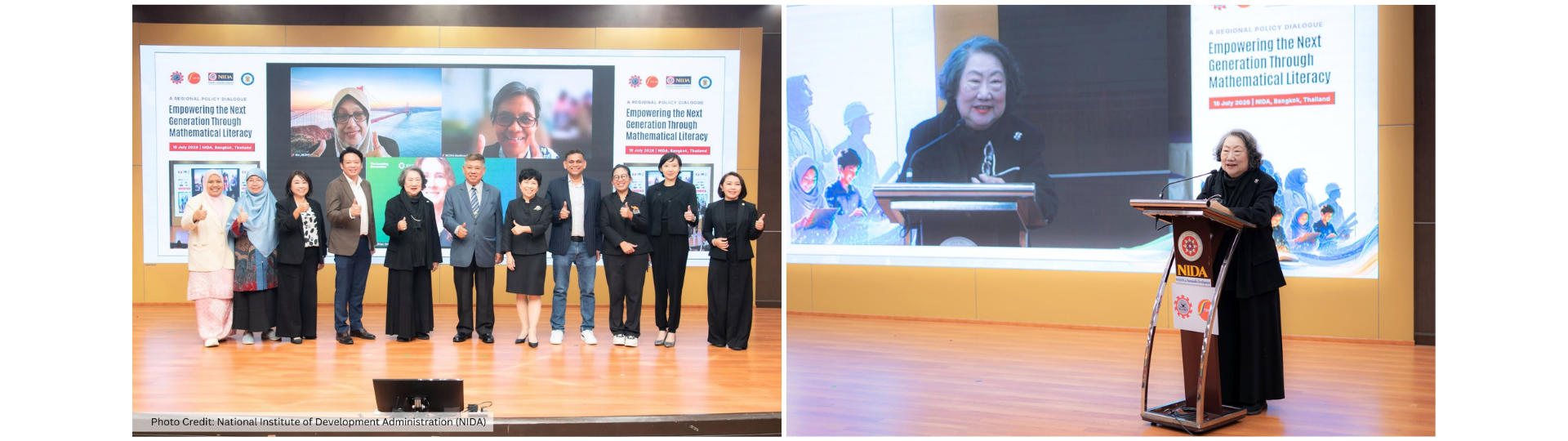
In her opening remarks, Assoc. Prof. Dr Juri Vijit Watagan, Chairperson of NIDA, emphasised that advancing mathematical literacy requires more than adopting new technologies. She highlighted the importance of evidence-informed policymaking, strong teacher support, equitable learning opportunities, and nurturing critical thinking and ethical values alongside mathematical competence.
The dialogue featured four sessions exploring mathematics education from multiple perspectives:
Session 1: Reimagining Mathematics Education Beyond Procedures
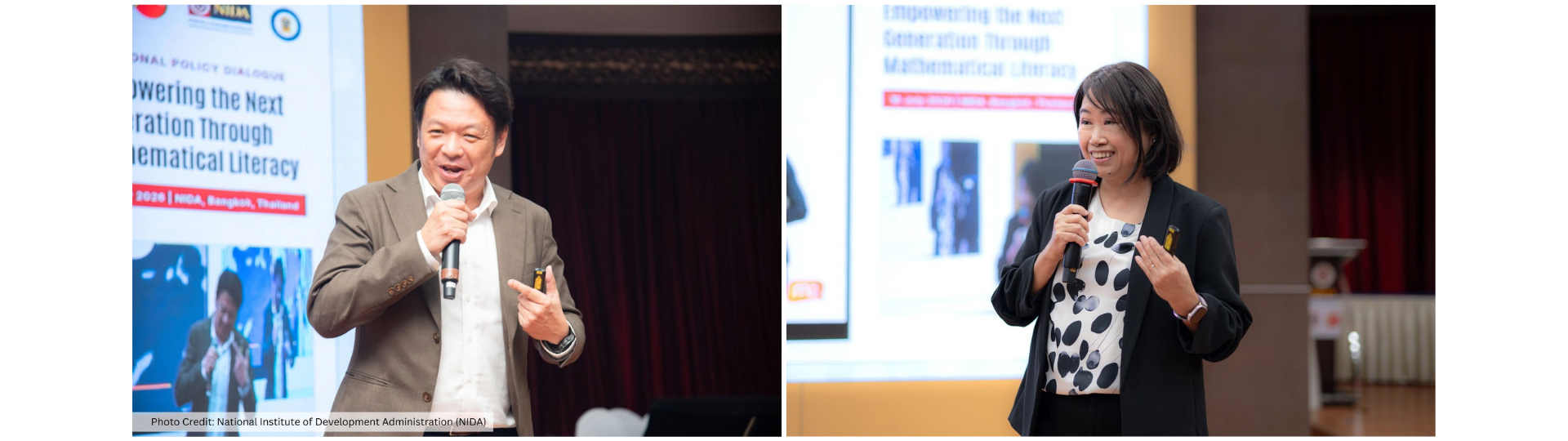
Mr Lim Soon Jinn and Ms Leong Phooi Qwan from Marshall Cavendish Education highlighted the importance of moving beyond procedural fluency to develop reasoning, problem solving, creativity, communication, and mathematical thinking through purposeful Singaporean curriculum design and effective pedagogical practices.
Session 2: Harnessing AI and Learning Analytics to Personalise Learning
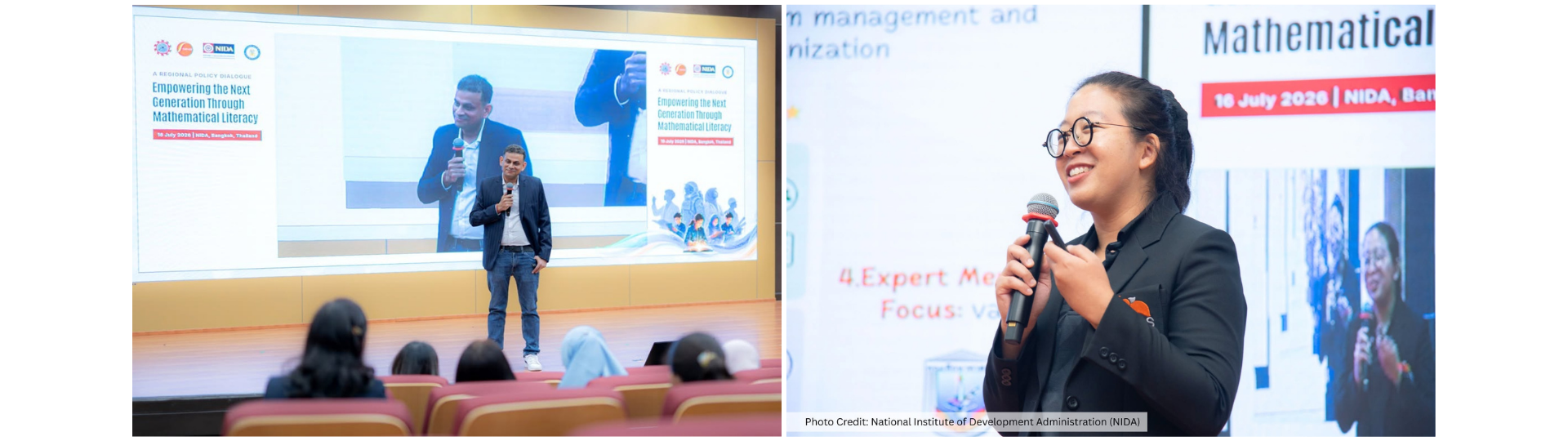
Mr Ashutosh Shukla (Explico) and Ms Suparat Chuechote (Naresuan University) demonstrated how AI-powered assessment and learning analytics can help teachers identify learning gaps, personalise instruction, and support students' confidence, self-directed learning, and mathematical growth while ensuring technology remains aligned with curriculum and classroom needs.
Session 3: High Touch, High Tech for Mathematics Learning
Ms Amy Bellinger and Ms Sattiya Langkhapin from Education Development Center (EDC) presented evidence from implementation across Uruguay, Vietnam, Cambodia, and the Philippines, demonstrating how adaptive technology, combined with strong teacher practices, coaching, and data-informed instruction, can improve learning outcomes, particularly for students who need the greatest support.

Session 4: Unplugged Computational Thinking in Mathematics Education
Representatives from SEAMEO STEM-ED, SEAMEO QITEP in Mathematics, SEAMEO SEAMOLEC, and SEAMEO RECSAM showcased a collaborative regional initiative integrating computational thinking into mathematics through unplugged, hands-on activities. The initiative demonstrated how contextualised learning, lesson study, and regional collaboration can strengthen mathematical reasoning, computational thinking, and STEM learning from the early grades.
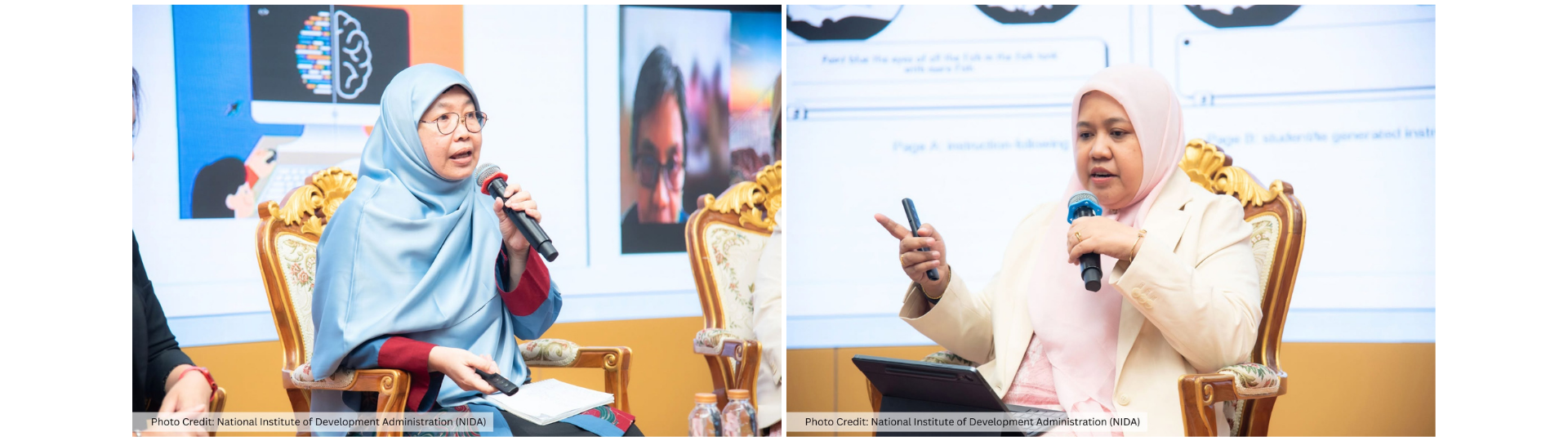

Throughout the dialogue, Q&A sessions explored important issues including scaling successful innovations, ensuring sustainability beyond pilot projects, strengthening teacher capacity, supporting both in-service and pre-service teacher development, and creating the policy conditions needed to translate promising evidence into systemic educational improvement.
Led by Dr Kessara Amornvuthivorn, Centre Director of SEAMEO STEM-ED, the dialogue concluded with a productive exchange on future regional collaboration. Participants reaffirmed their shared commitment to advancing mathematical literacy across Southeast Asia through evidence-based innovation, strategic partnerships, and a dedicated pilot programme to drive meaningful change.