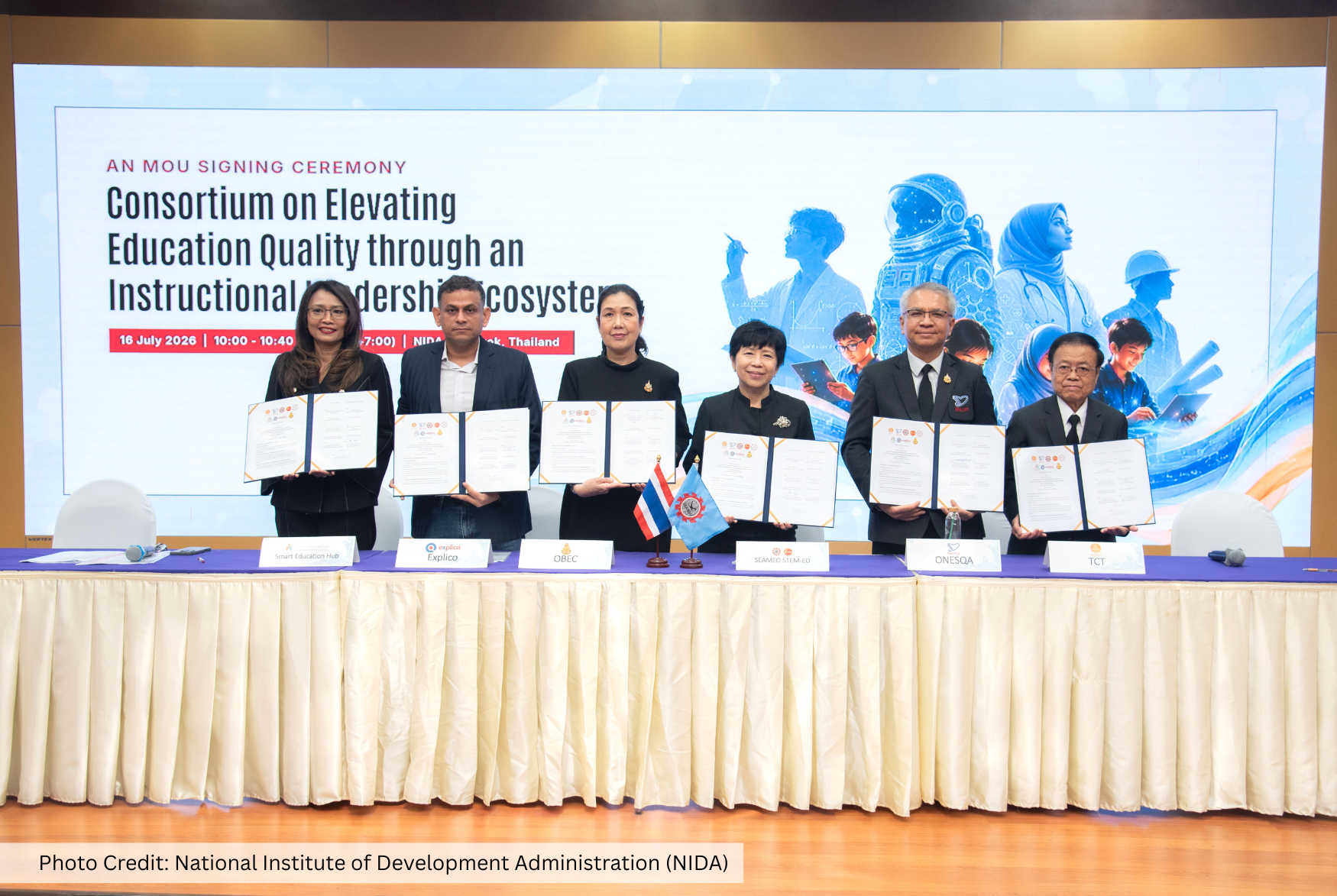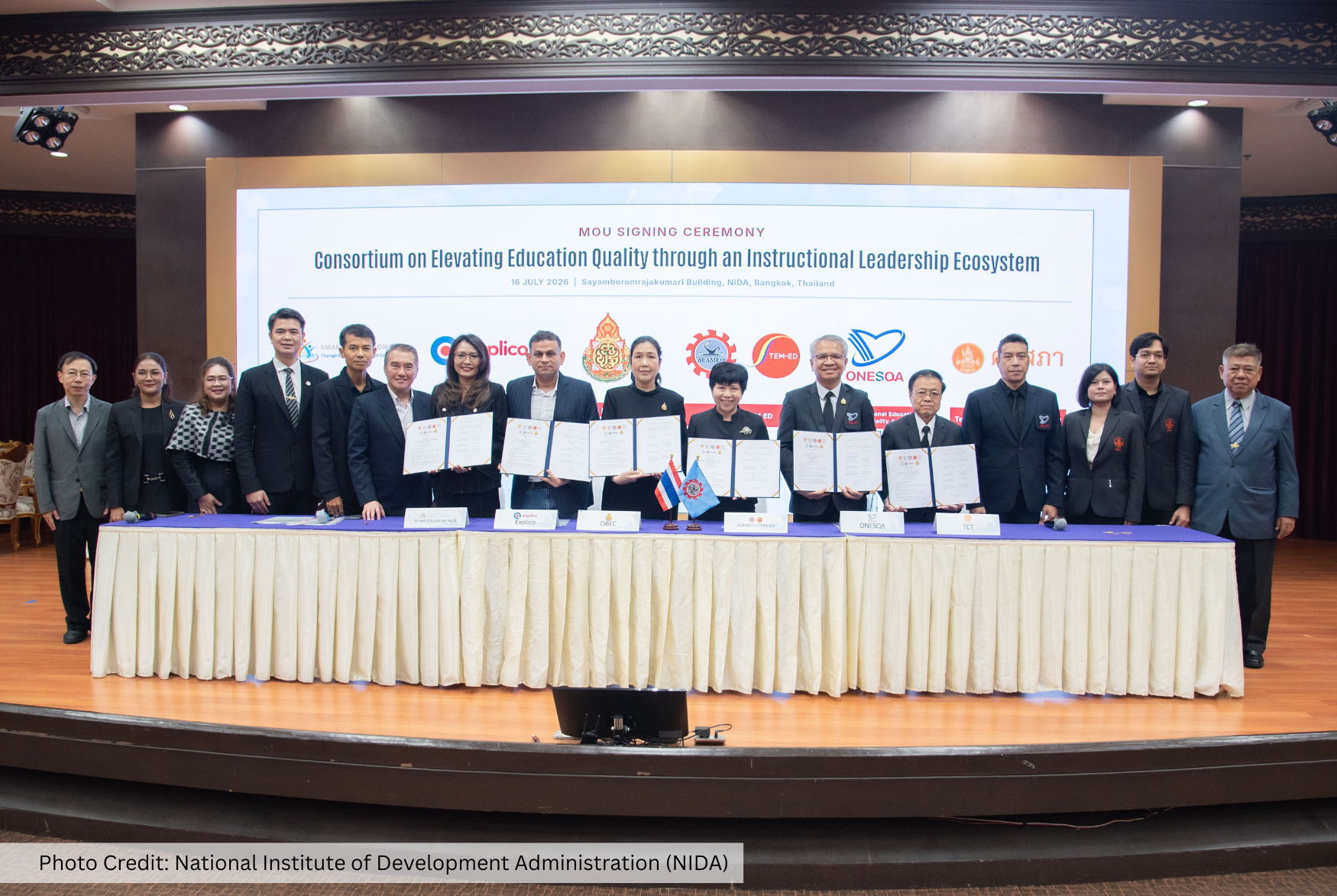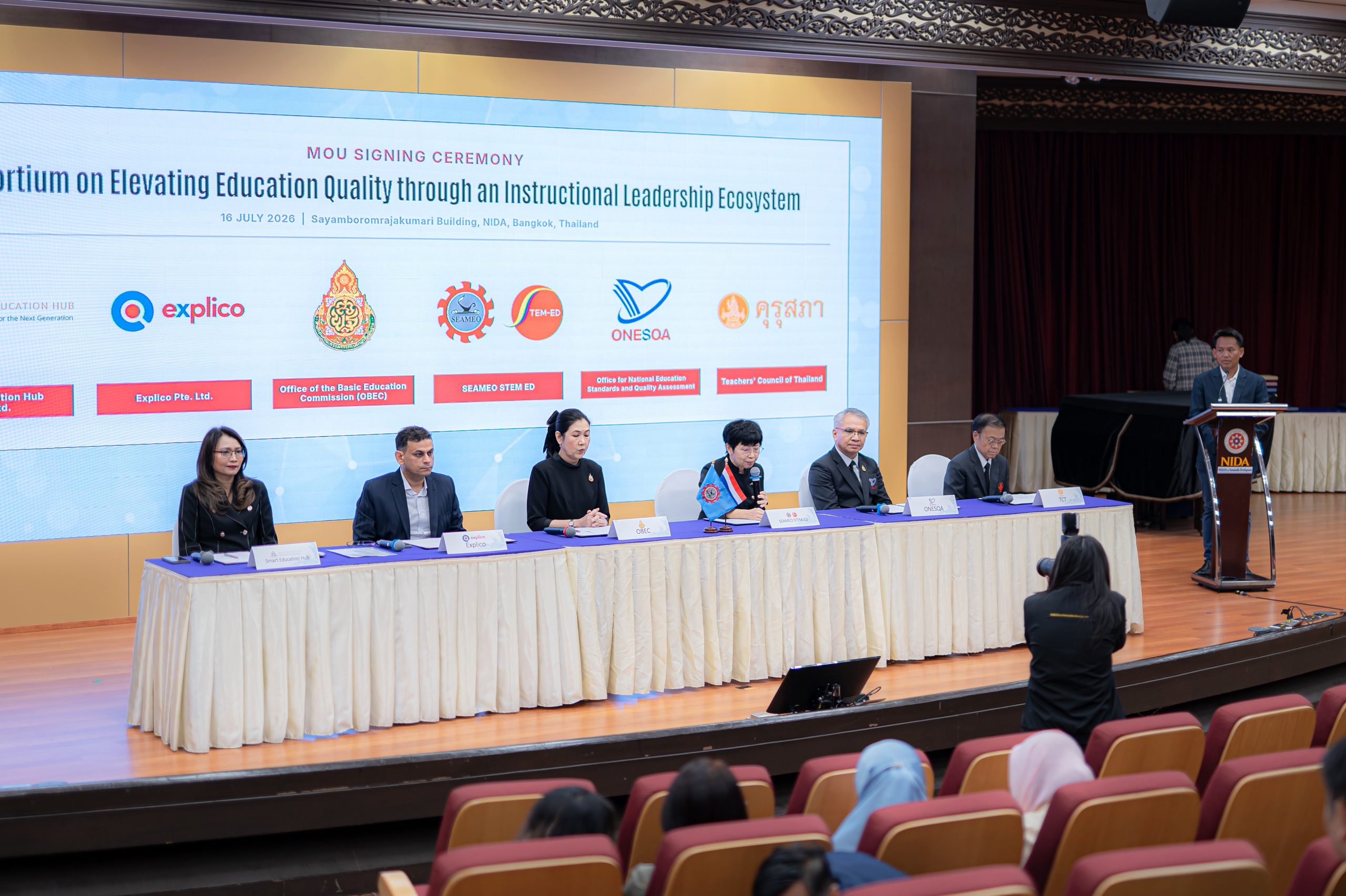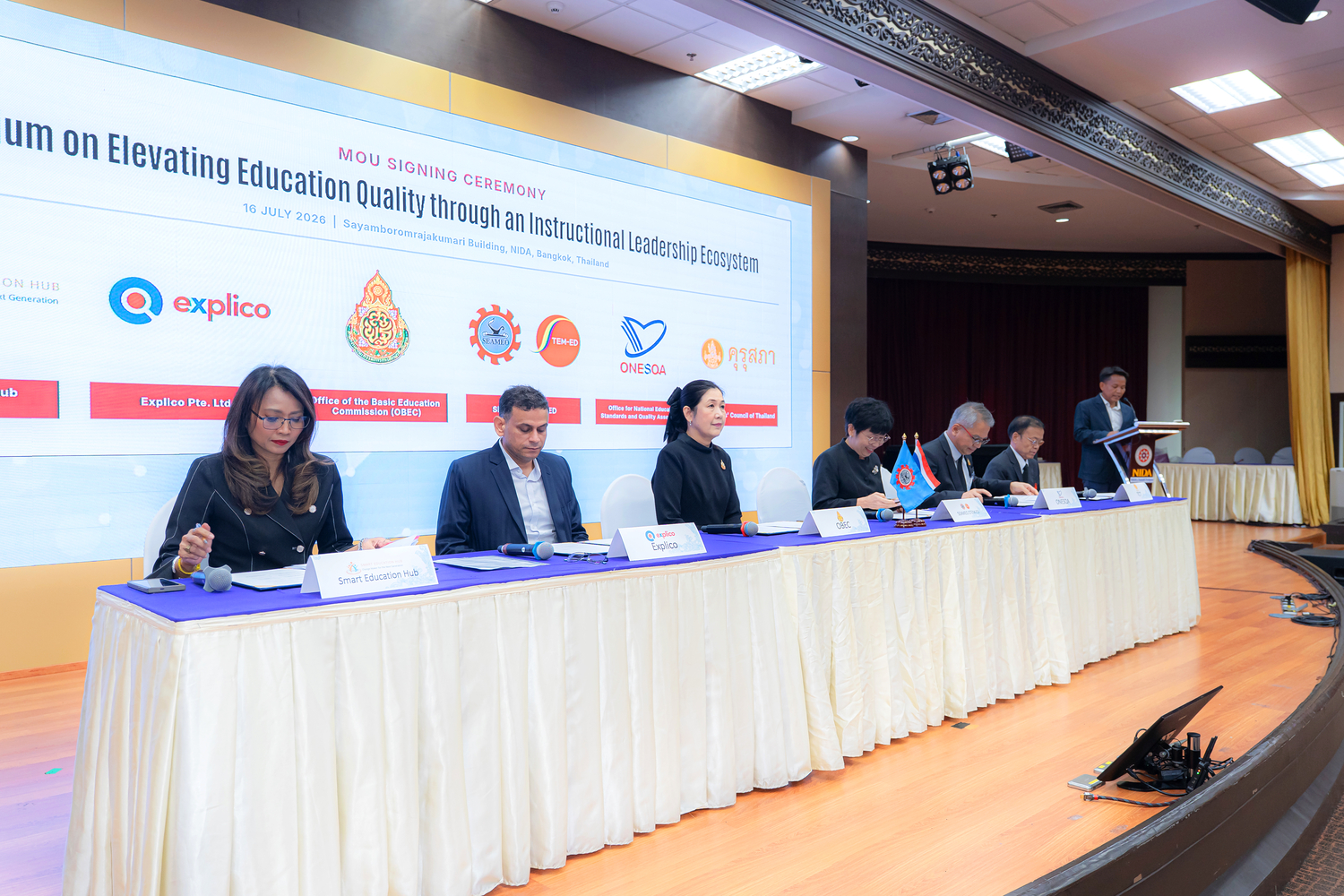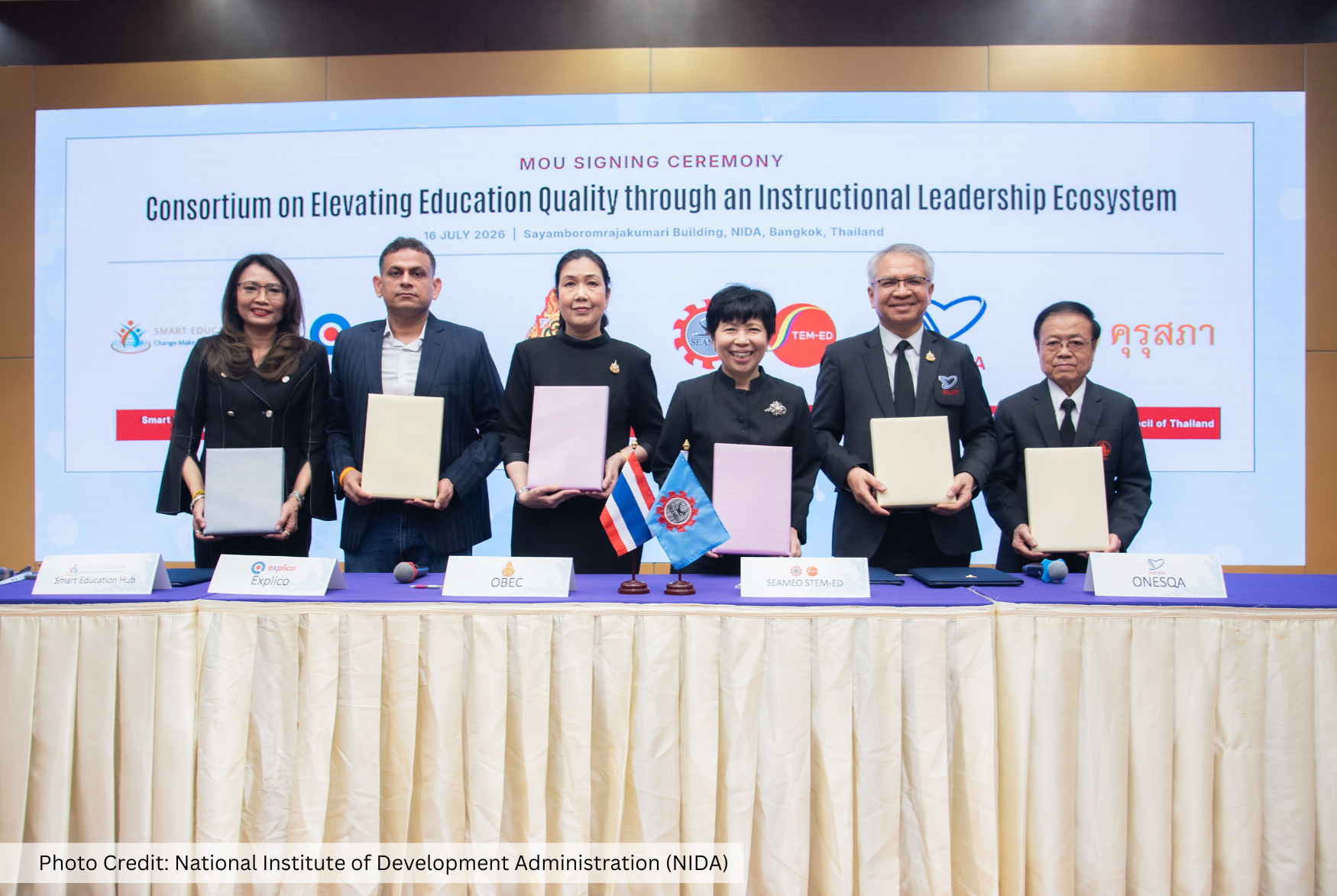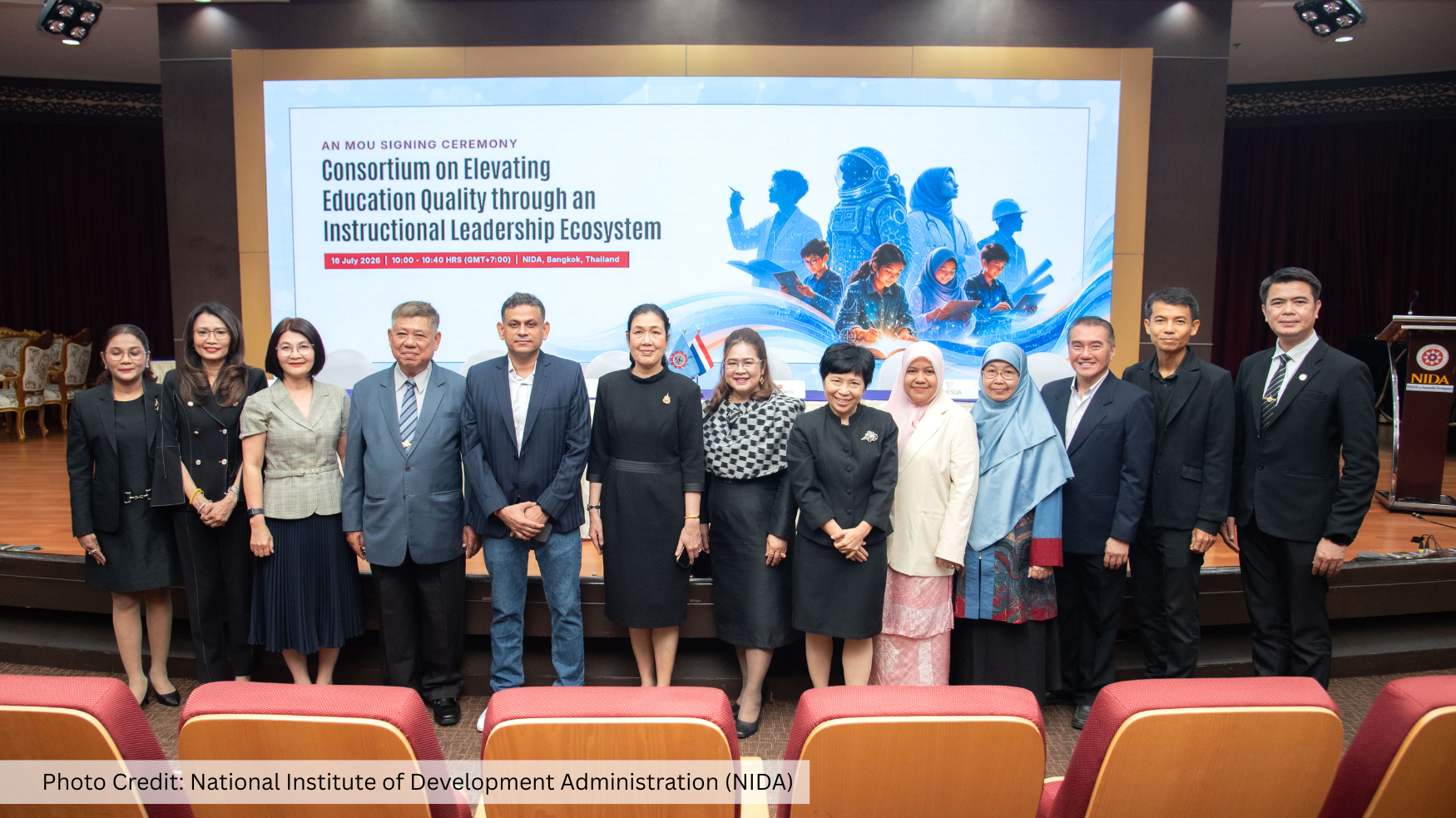
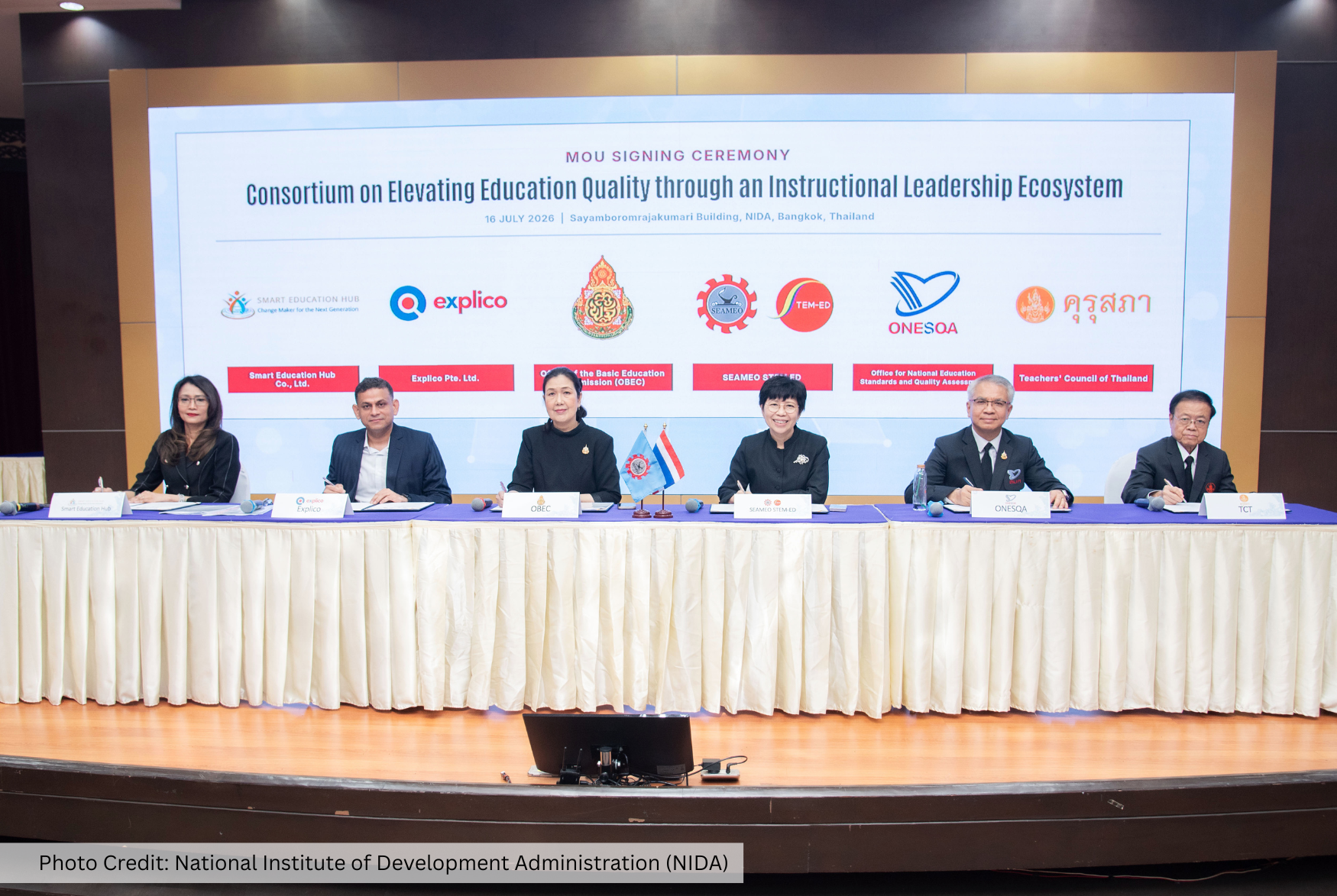
SEAMEO STEM-ED, together with six partner organisations, signed a Memorandum of Understanding (MoU) on 16 July 2026 at the National Institute of Development Administration (NIDA), Bangkok, Thailand, to establish the Consortium on Elevating Education Quality through an Instructional Leadership Ecosystem. The partnership marks a shared commitment to strengthening instructional leadership and enhancing educational quality through collaborative, evidence-informed approaches.
The consortium brings together expertise from government agencies, academia, regional organisations, and education technology partners to strengthen support for those closest to teaching and learning, including core supervisors, school leaders, teachers, and pilot schools. Through this collaboration, the partners aim to strengthen professional capacity, promote the use of classroom evidence in educational improvement, and foster meaningful learning opportunities for students.
The consortium comprises SEAMEO STEM-ED, the Office of the Basic Education Commission (OBEC), the Teachers’ Council of Thailand (TCT), the Office for National Education Standards and Quality Assessment (ONESQA), Srinakharinwirot University (SWU), Explico Pte. Ltd., and Smart Education Hub Co., Ltd.
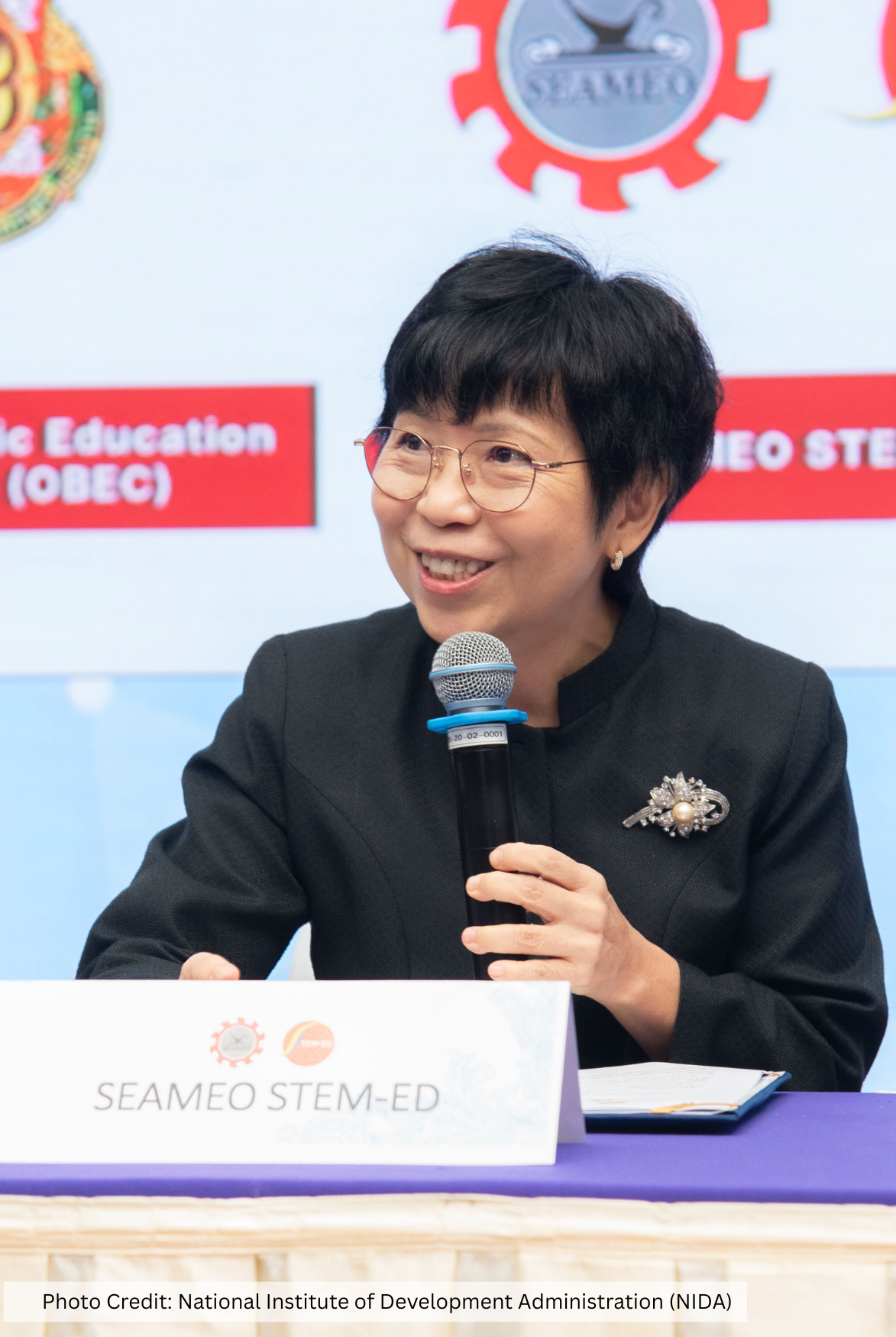
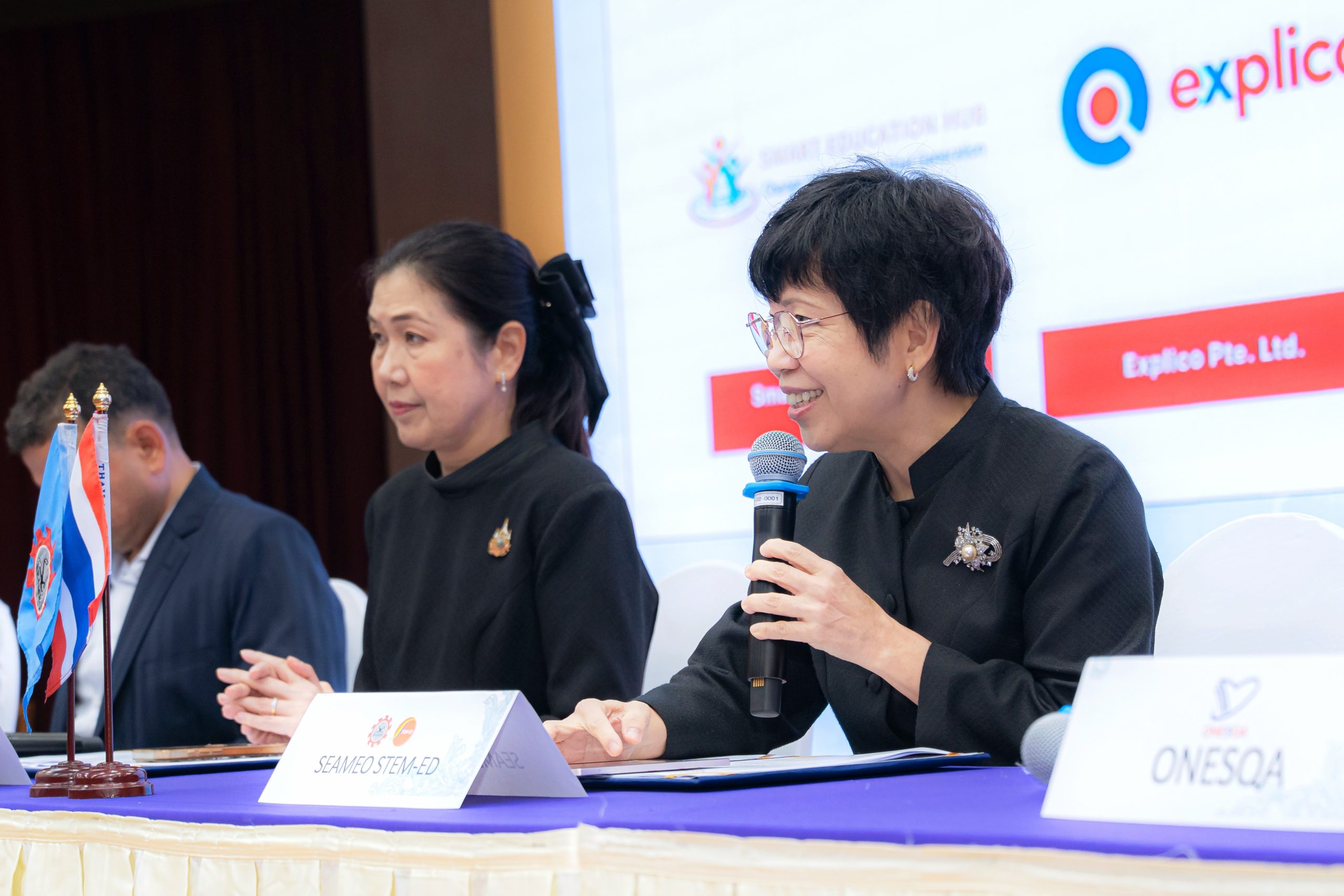
Delivering the opening remarks, Dr Kessara Amornvuthivorn, Centre Director of SEAMEO STEM-ED, described the initiative as a shared vision to establish a systematic approach to educational improvement by strengthening the support system surrounding teachers and schools. She emphasised that sustainable change requires more than developing teachers alone; educational supervisors and school leaders must also be equipped to understand deep learning and use classroom evidence to make informed academic decisions.
At the heart of the initiative is the development of Core Supervisors, who will serve as instructional leaders bridging national policy and classroom practice through coaching and mentoring. The consortium is built upon three interconnected pillars: literacy and communication through the Picture Book Project in partnership with Srinakharinwirot University; numeracy and digital technology through a Smart Learning Platform supported by Explico and Smart Education Hub; and scientific reasoning and STEM education through the Claim–Evidence–Reasoning (CER) framework under the STEM Education Leadership for Change project. Dr Kessara added that SEAMEO STEM-ED will serve as the regional hub connecting academic research, international partnerships, and practical implementation while generating shared learning to strengthen curriculum, teaching, and assessment.
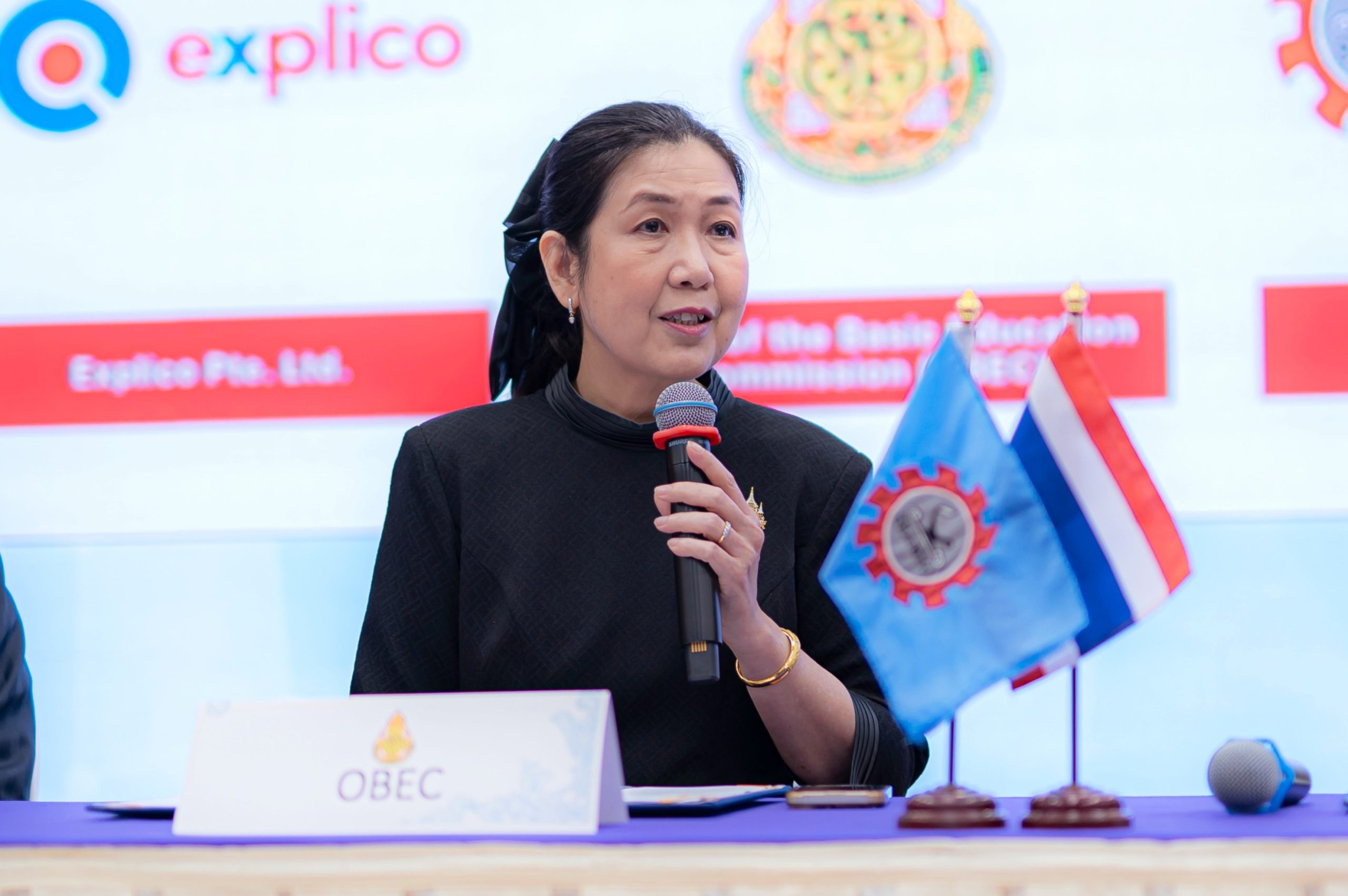
The consortium also brings together Thailand's key education agencies to strengthen implementation, quality assurance, and professional learning. Representing the Office of the Basic Education Commission (OBEC), Dr Artittaya Panya, Assistant Secretary-General of OBEC, highlighted the importance of supporting core supervisors, school leaders, teachers, and students through evidence-based approaches and learning from implementation in diverse school contexts. She noted that the initiative would help address challenges related to literacy, numeracy, critical thinking, and problem-solving while strengthening the capacity of educational supervisors, school leaders, and teachers.
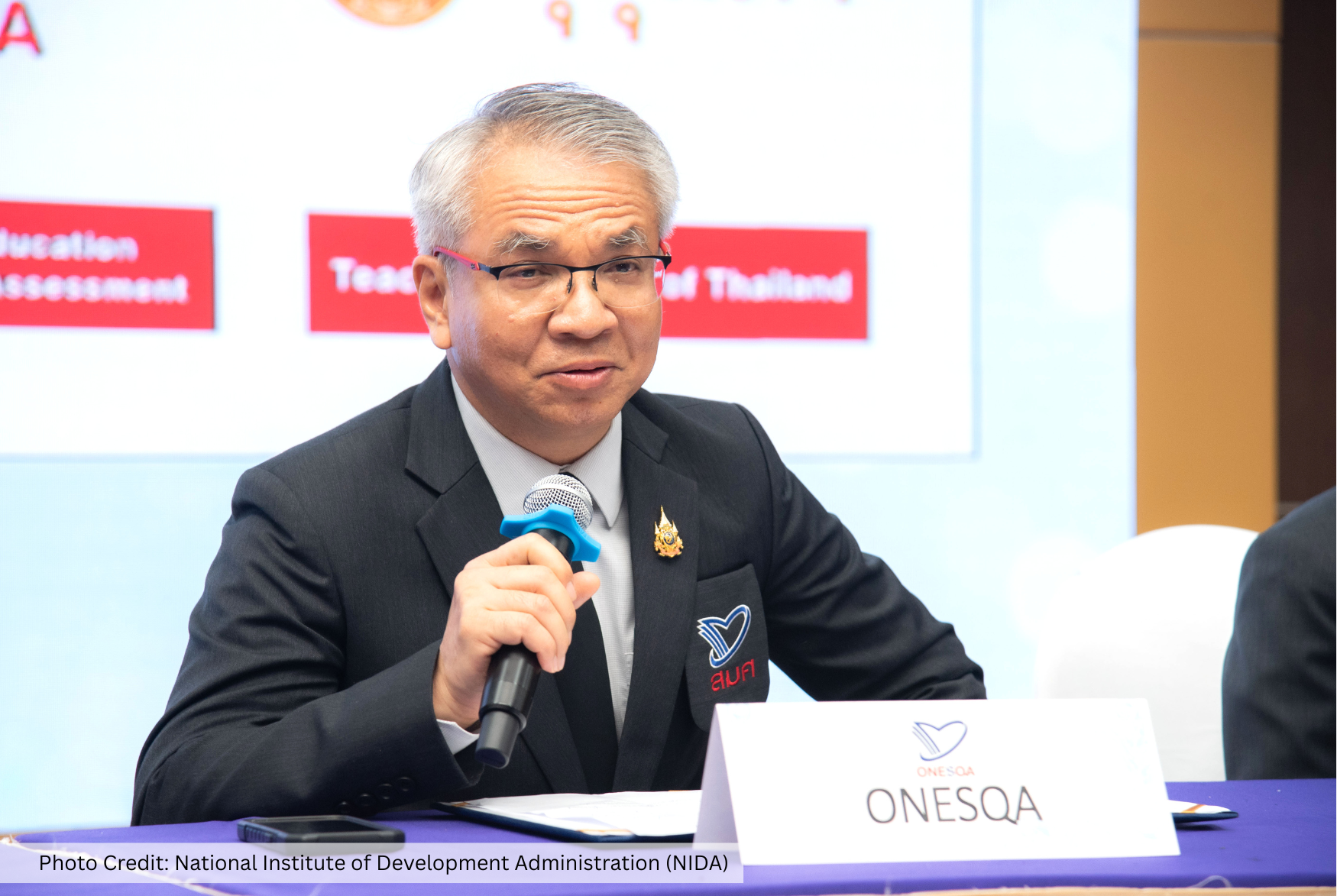
Professor Dr Ong-art Naiyapatana, Director of the Office for National Education Standards and Quality Assessment (ONESQA), emphasised that quality assurance should serve as a catalyst for continuous school improvement by integrating instructional leadership, classroom evidence, STEM learning, climate-related learning, and school quality. He noted that ONESQA will contribute through quality assurance indicators, co-evaluation, academic guidance, leadership expertise, and research, ensuring that evidence supports reflection, informed decision-making, and continuous improvement rather than creating additional burdens for schools.
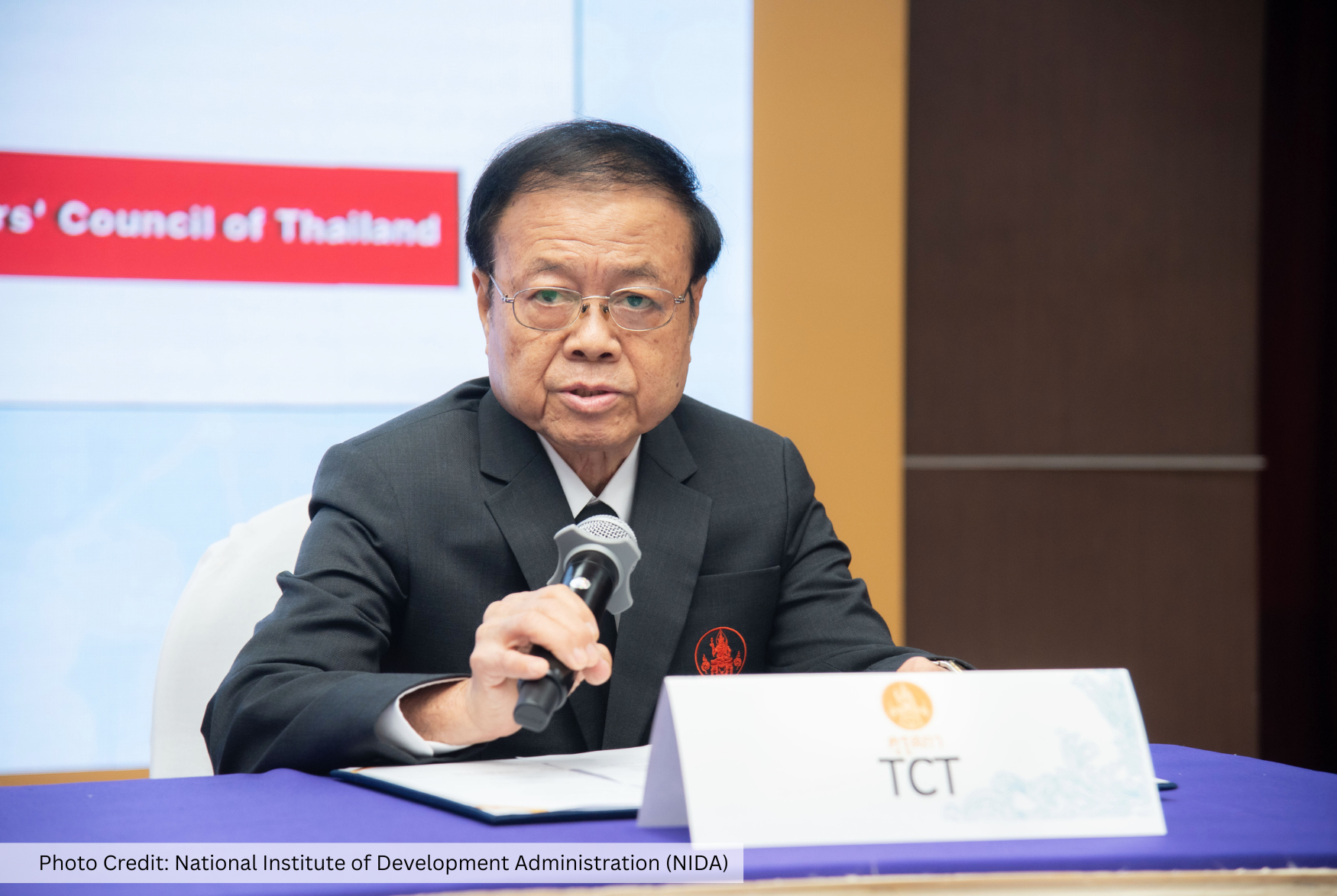
Representing the Teachers’ Council ofThailand (TCT), Assoc Prof Dr Sumeth Deoisres, Legal Specialist to the Secretariat Office of the Teachers’ Council of Thailand, reaffirmed the importance of strengthening instructional leadership, coaching, and mentoring competencies among core supervisors, school leaders, and teachers through recognised continuing professional development. He noted that sustained professional learning would foster reflective practice, collaboration, and stronger support for educators and learners alike.
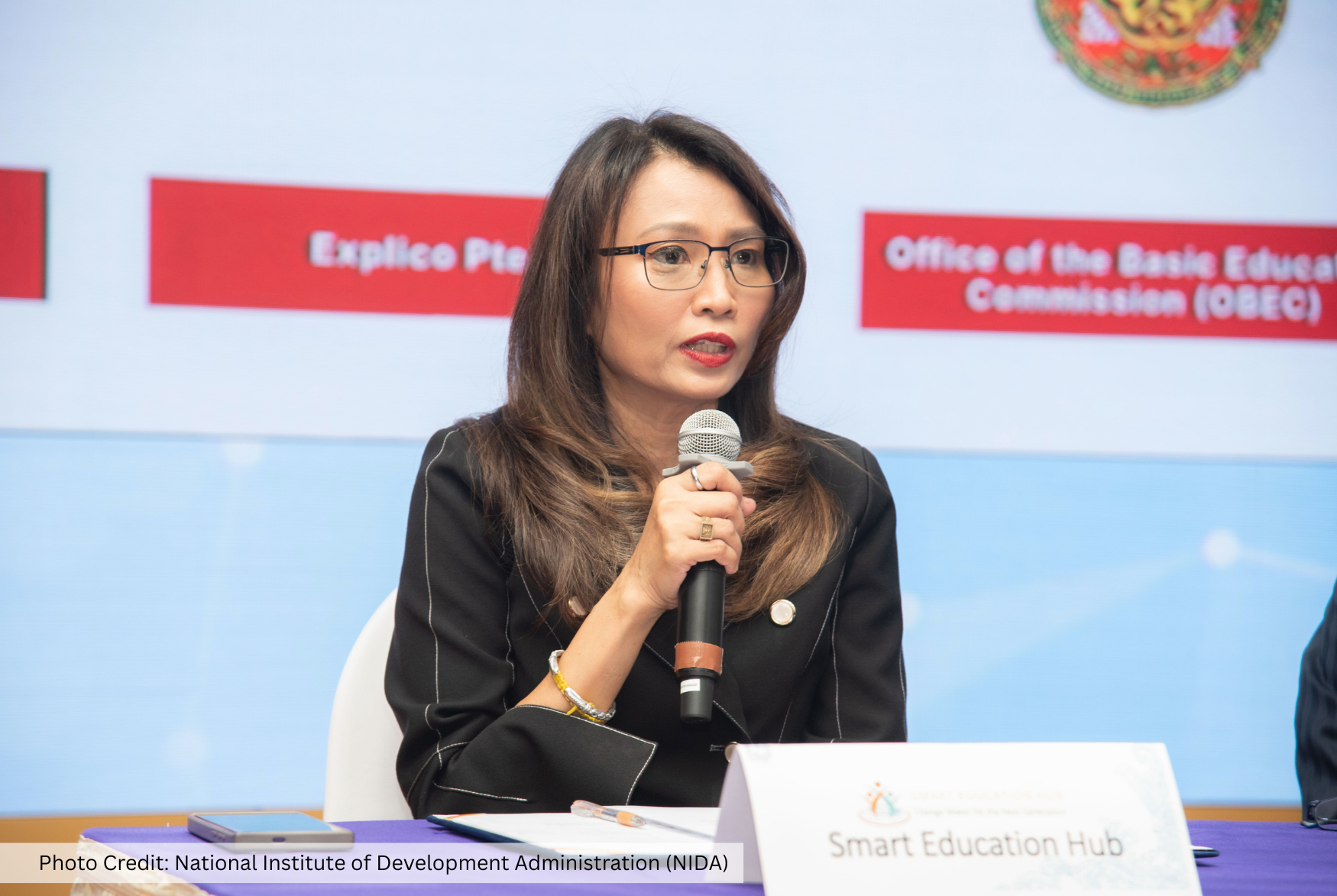
The consortium is further strengthened by technology partners committed to supporting evidence-informed teaching and learning. Ms Nada Abhiskulshat, Chief Executive Officer and Founder of Smart Education Hub Co., Ltd., emphasised that learning data should be used to provide better support for learners rather than simply generate more information. She highlighted the role of artificial intelligence and digital tools in helping teachers and core supervisors interpret learning data, identify where learners require additional support, and use evidence to guide targeted instruction and professional learning. She added that technology delivers the greatest value when it strengthens teachers' professional judgement and supports more responsive learning for every student.
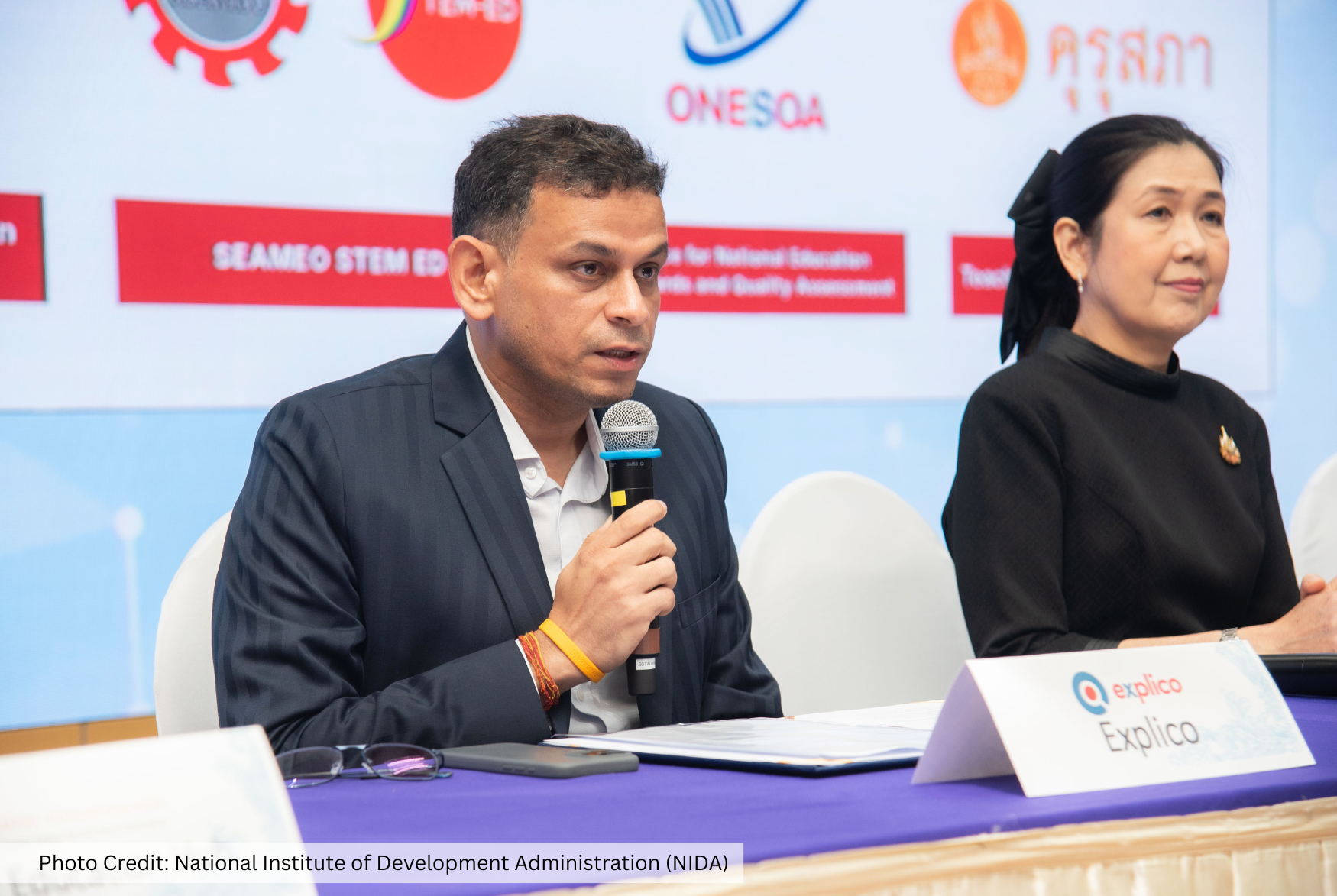
Echoing this commitment, Mr Shukla Ashutosh, Chief Executive Officer, Chief Technology Officer, and Founder of Explico Pte. Ltd., reaffirmed the company's support for the responsible use of digital learning technologies. He noted that Explico will provide pilot schools with access to a smart learning platform featuring digital learning resources, including video tutorials, interactive e-books, assessments, analytics, and question banks. He emphasised that technology should complement teachers, supervisors, curriculum, and evidence-informed practice, helping educators make informed decisions, expand access to quality learning resources, and support meaningful, responsible, and sustainable learning in schools.
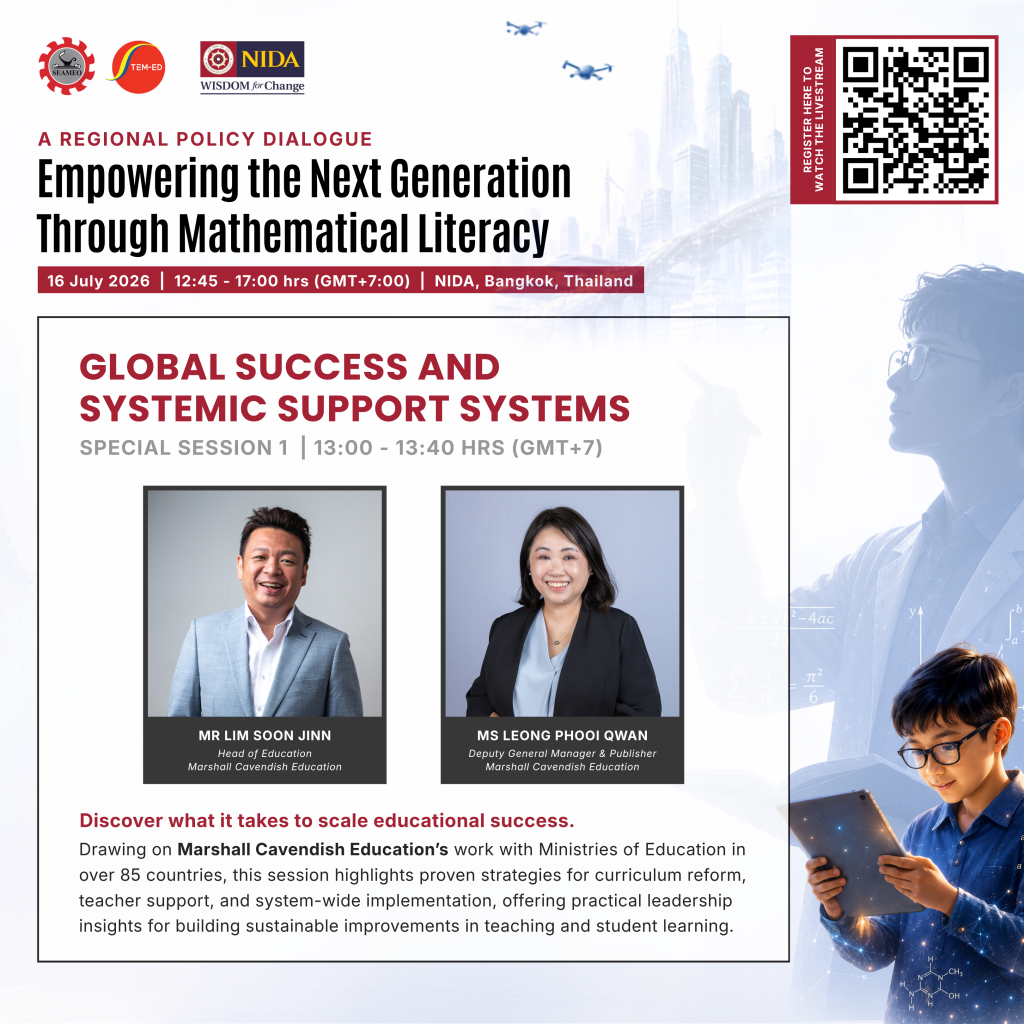
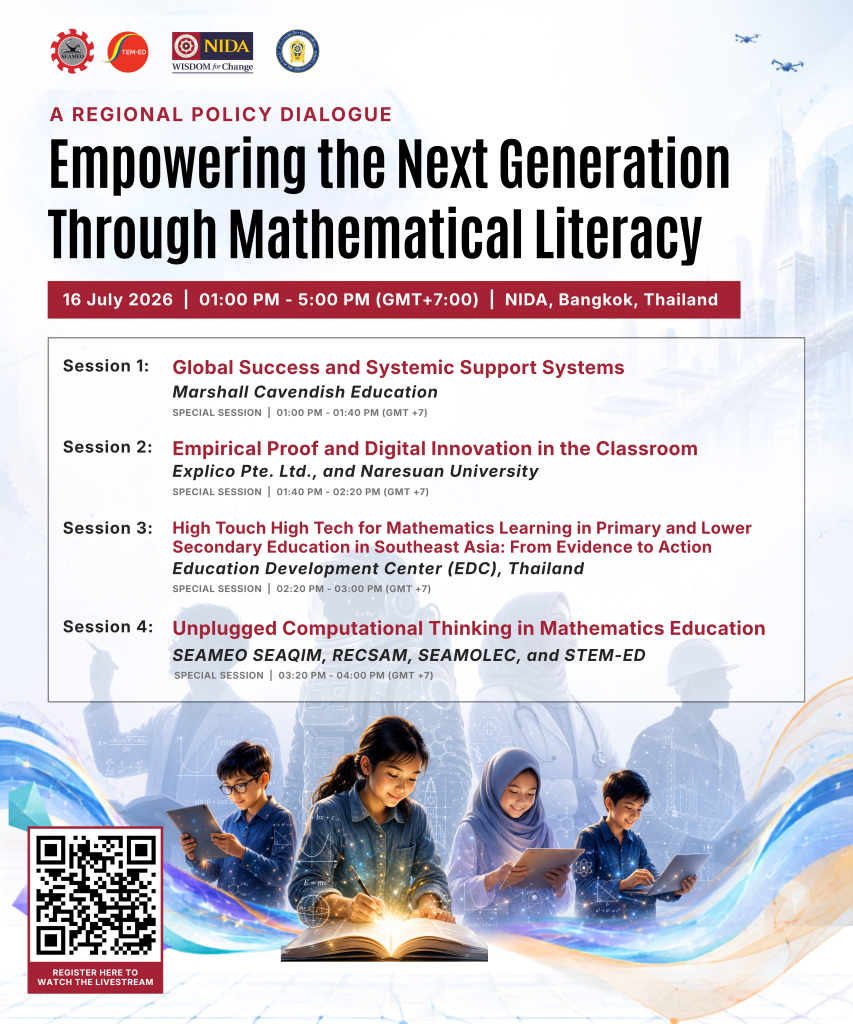
The MoU signing marks the beginning of a long-term collaboration to strengthen instructional leadership, promote evidence-informed educational improvement, and enhance learning opportunities for students. Following the ceremony, participants continued the day's programme with the Policy Dialogue: Empowering the Next Generation Through Mathematical Literacy, which explored regional perspectives and collaborative approaches to advancing mathematical literacy across Southeast Asia.