SEAMEO STEM-ED was honoured to be invited as a key speaker in the Pre-Event Online Course of the 14th SEAMEO–University of Tsukuba Symposium, an important lead-up to the main symposium, jointly organised by the SEAMEO Secretariat and the University of Tsukuba. Held under the theme “Empowering Learning Futures: Digital Transformation for Equitable and Sustainable Education,” the session provided a valuable platform for regional dialogue on how digital transformation, artificial intelligence, and data can support more equitable and sustainable education systems across the region.
The pre-event course featured keynote contributions from Dr Kessara Amornvuthivorn, Director of SEAMEO STEM-ED, Dr Majah Leah-Ravago, Director of SEAMEO INNOTECH, and Dr Nakao Nomura, Director of the Center for Research on International Cooperation in Educational Development (CRICED), University of Tsukuba. SEAMEO STEM-ED extends its sincere appreciation to the SEAMEO Secretariat for the kind invitation and opportunity to contribute to this important regional exchange.
The session was moderated by Mr Carlo Fernando, Learning Innovation Information Specialist, SEAMEO Secretariat, with opening remarks by Prof Masumi Isoda (CRICED, University of Tsukuba) and welcome remarks by Datuk Dr Habibah Abdul Rahim, Director, SEAMEO Secretariat.
SEAMEO STEM-ED Session at a Glance
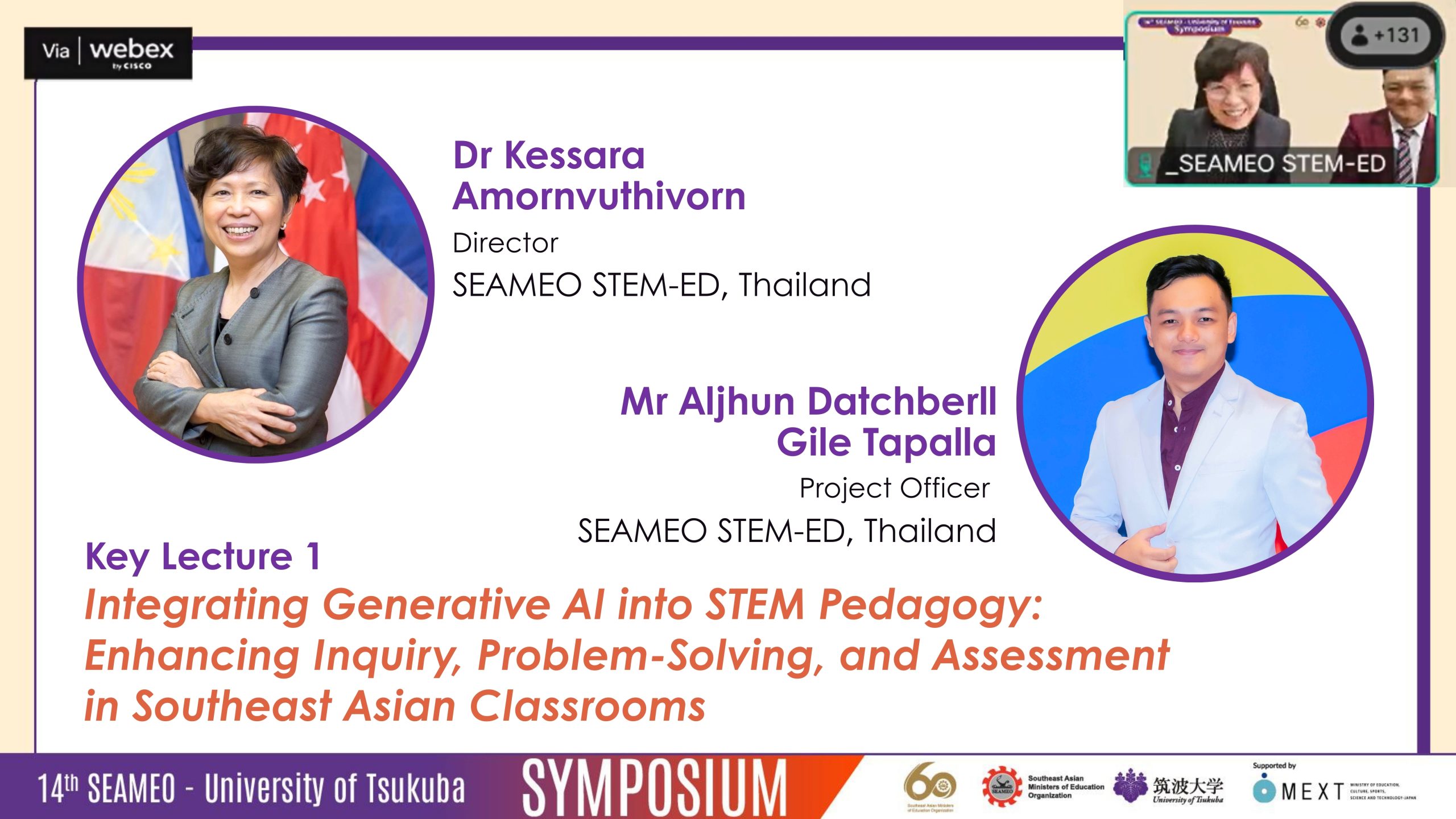
Key Lecture 1 | SEAMEO STEM-ED
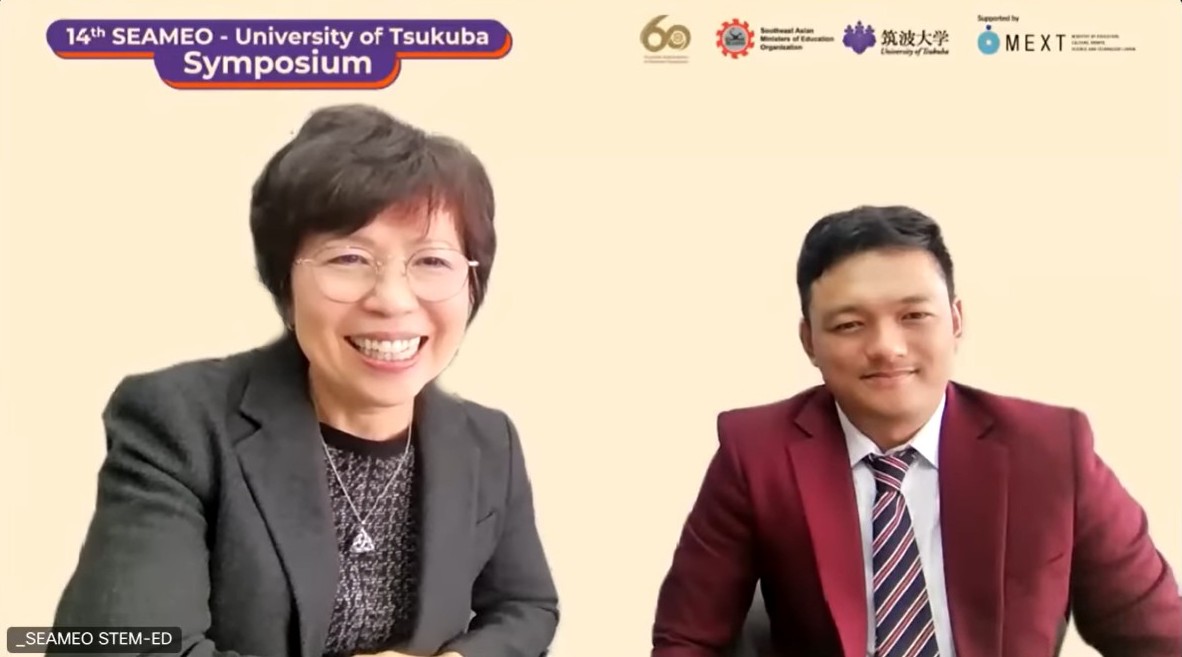
The first key lecture was led by Dr Kessara Amornvuthivorn, Director, SEAMEO STEM-ED, and co-presented by Mr Aljhun Datchberll Gile Tapalla, Project Officer (Programme Division).
Dr Kessara opened by inviting reflection on whether current education systems are responding to future job demands, particularly in a region where many learners continue to face skills mismatches and limited opportunities. She highlighted the rapid growth of jobs related to data, AI, analytics, fintech, and sustainability, and questioned whether students are being sufficiently equipped with data literacy and evidence-based decision-making skills.
She connected these trends to the PISA Global Competency Framework, especially science, environmental, and emerging climate competencies, which emphasise using data and evidence to explain phenomena and take informed action. Despite widespread recognition of the importance of STEM education, she noted persistent challenges across Southeast Asia, including limited teacher capacity, student learning gaps, insufficient engaging tools, and difficulties for education leaders in designing context-responsive, evidence-based policies.
Against this backdrop, Dr Kessara positioned generative AI as a complementary technology—one that works alongside existing digital tools to support teachers, learners, and education leaders—while stressing the importance of responsible use, equity, and regional collaboration.
Building on this foundation, Mr Aljhun Datchberll Gile Tapalla illustrated how AI and educational technology can be effectively integrated into classroom practice to enhance student learning.
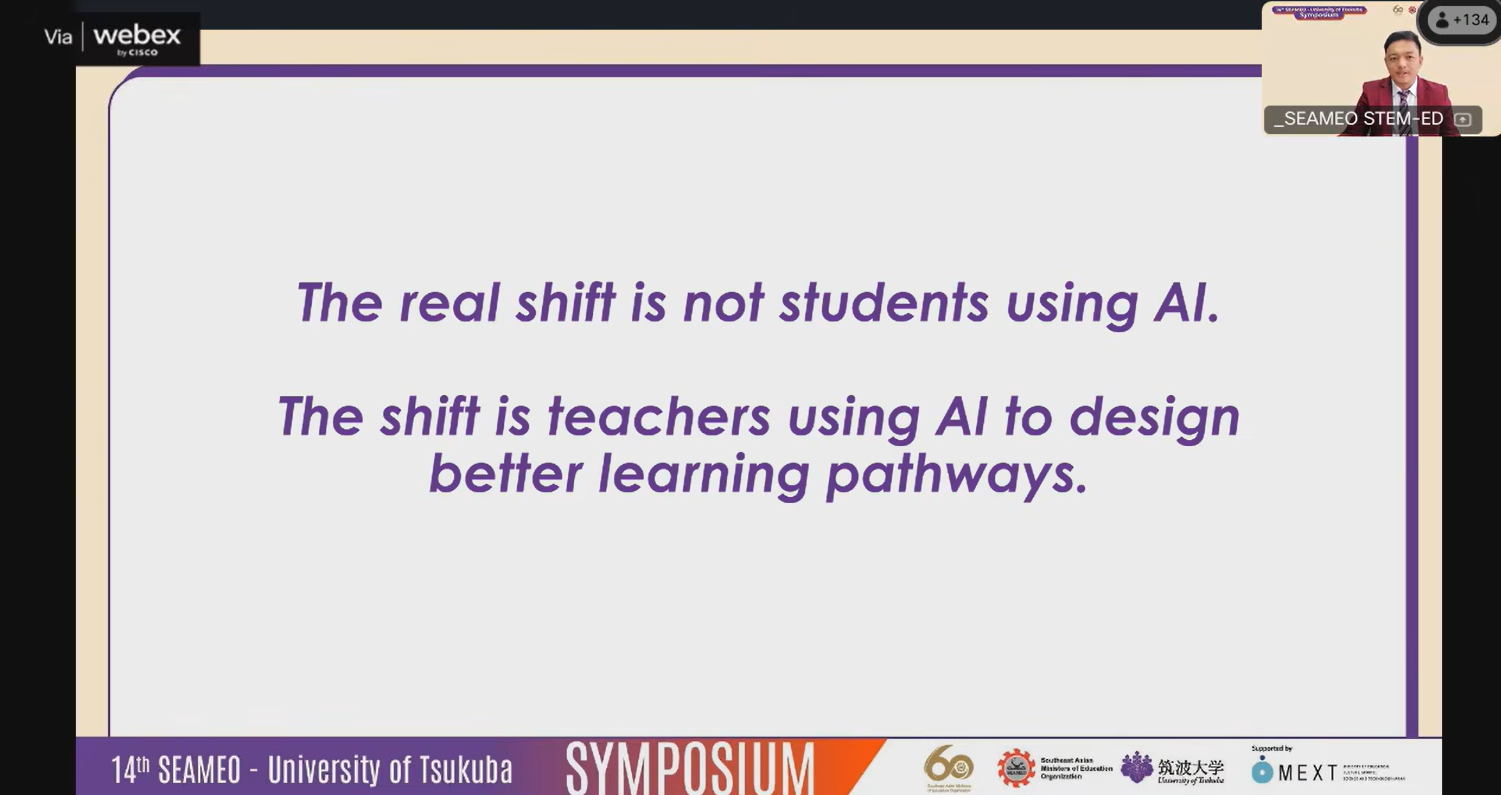
He emphasised that the real shift lies not in students using AI merely to obtain answers, but in teachers leveraging AI to design richer and more personalised learning pathways, with AI serving as a thinking partner rather than an answering machine.
He demonstrated how generative AI can be used to enhance existing STEM tools already implemented across Southeast Asia through the SEA-TEP programme and related workshops, including:
Key Takeaways
The session emphasised that one of the most critical skills for learners today is not asking AI for answers, but learning how to ask the right questions. Prompting is itself a thinking skill—and like all thinking skills, it must be intentionally taught. When students use AI to test ideas, explore scenarios, and refine reasoning, AI becomes a true thinking partner. As highlighted in the session, tools are everywhere, but thinking is not, underscoring the importance of focusing not only on technology adoption, but also on purposeful pedagogical application.
Implications for Southeast Asian Education Systems
In closing, Dr Kessara returned to a system-level perspective, reminding participants that:
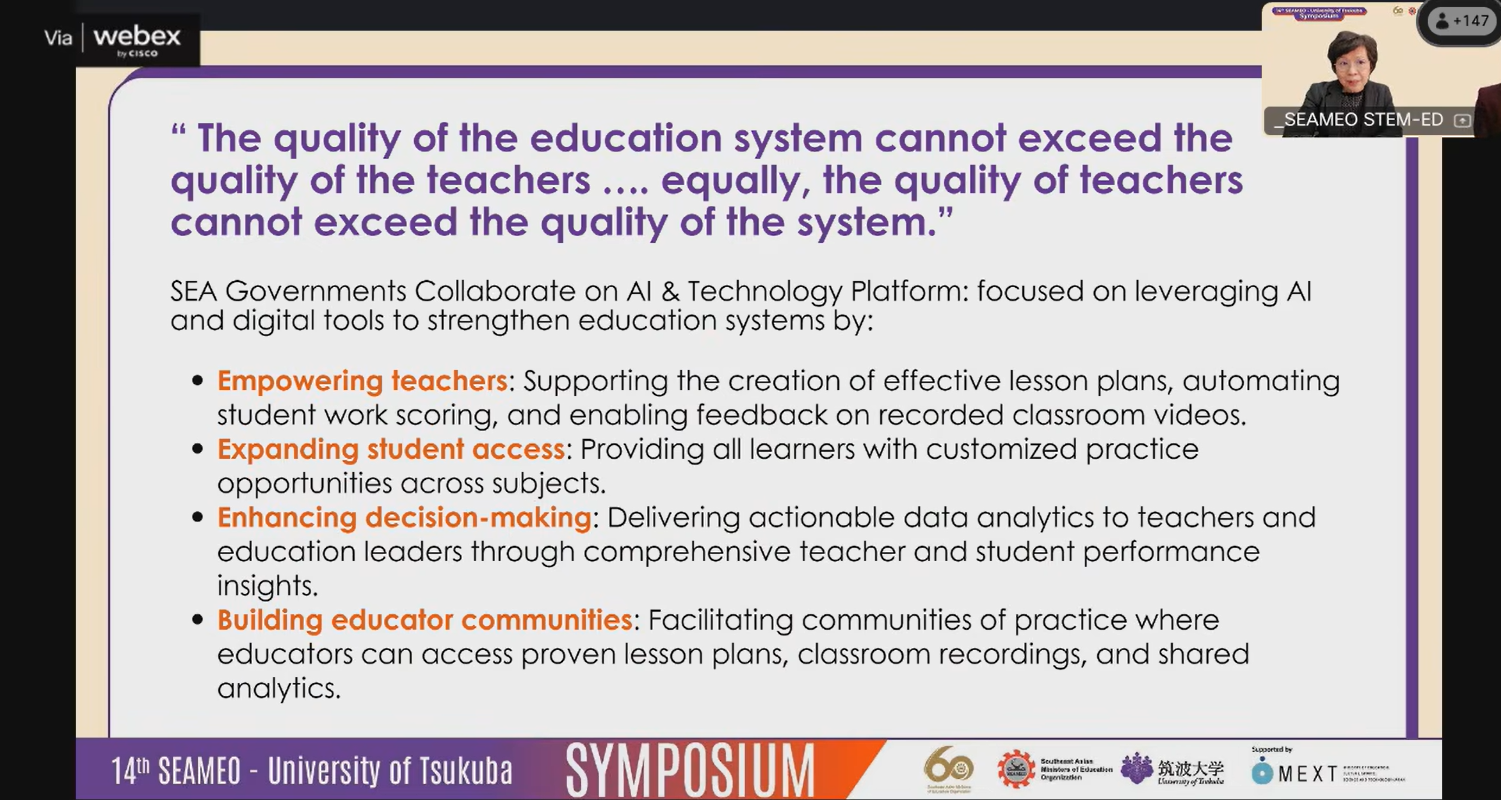
“The quality of an education system cannot exceed the quality of its teachers—and the quality of teachers cannot exceed the quality of the system.”
She emphasised that AI integration cannot rest on individual teachers alone, but must be supported by education leaders and system-level policies that create enabling environments for quality teaching and learning. She called for Southeast Asian governments to collaborate on shared AI and digital platforms that can:
Such platforms could provide students with access to high-quality, customisable learning resources beyond what is currently available through paid private services, while also enabling education leaders to use ethical, system-level data to inform future policies. She concluded by highlighting the value of sharing evidence-based practices, such as proven lesson plans and curriculum units, and expressed SEAMEO STEM-ED’s strong interest in continued regional collaboration through future programmes and initiatives.
▶️ Re-watch the webinar on the SEAMEO Secretariat YouTube:
https://www.youtube.com/live/C_hktuJBHqQ?si=bAORjiWWQXw6SnbW&t=1932
Also on our social media
Facebook: https://www.facebook.com/share/p/1FYhdT2eSj/
LinkedIn: https://www.linkedin.com/feed/update/urn:li:activity:7422096123693150209