SEA-TEP Webinar Session 1 Introduces Data and Modeling Tools for STEM Educators
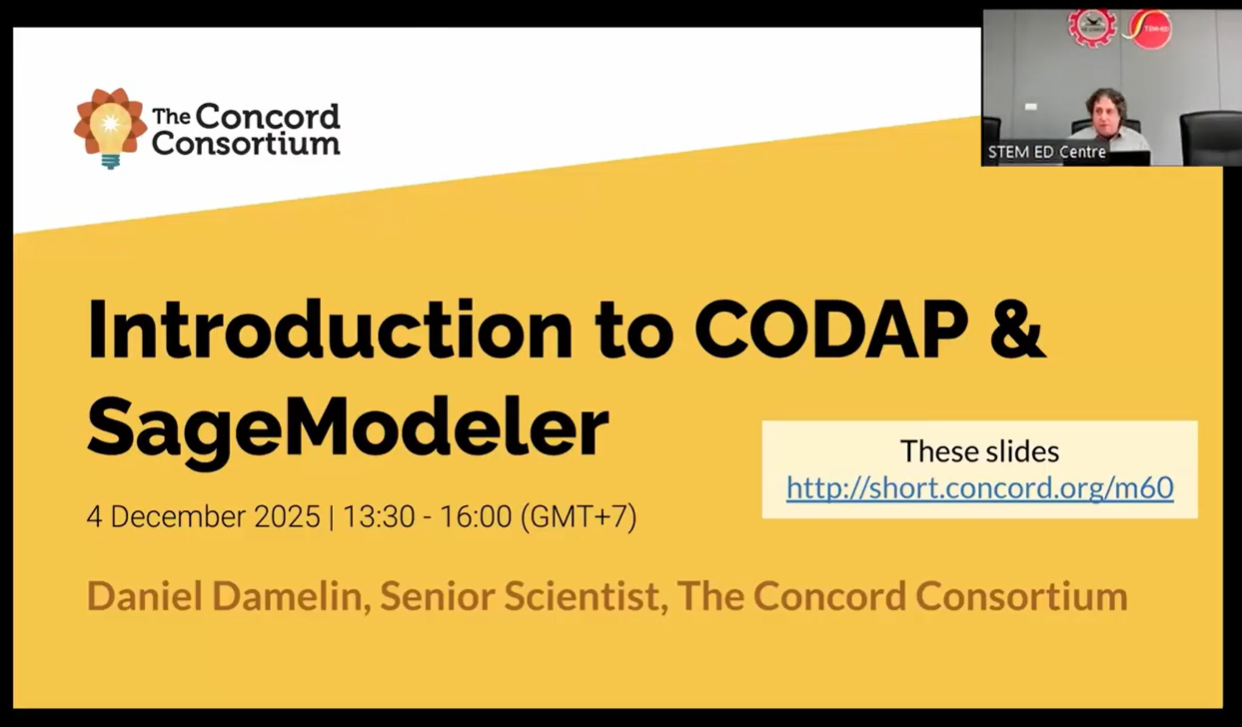
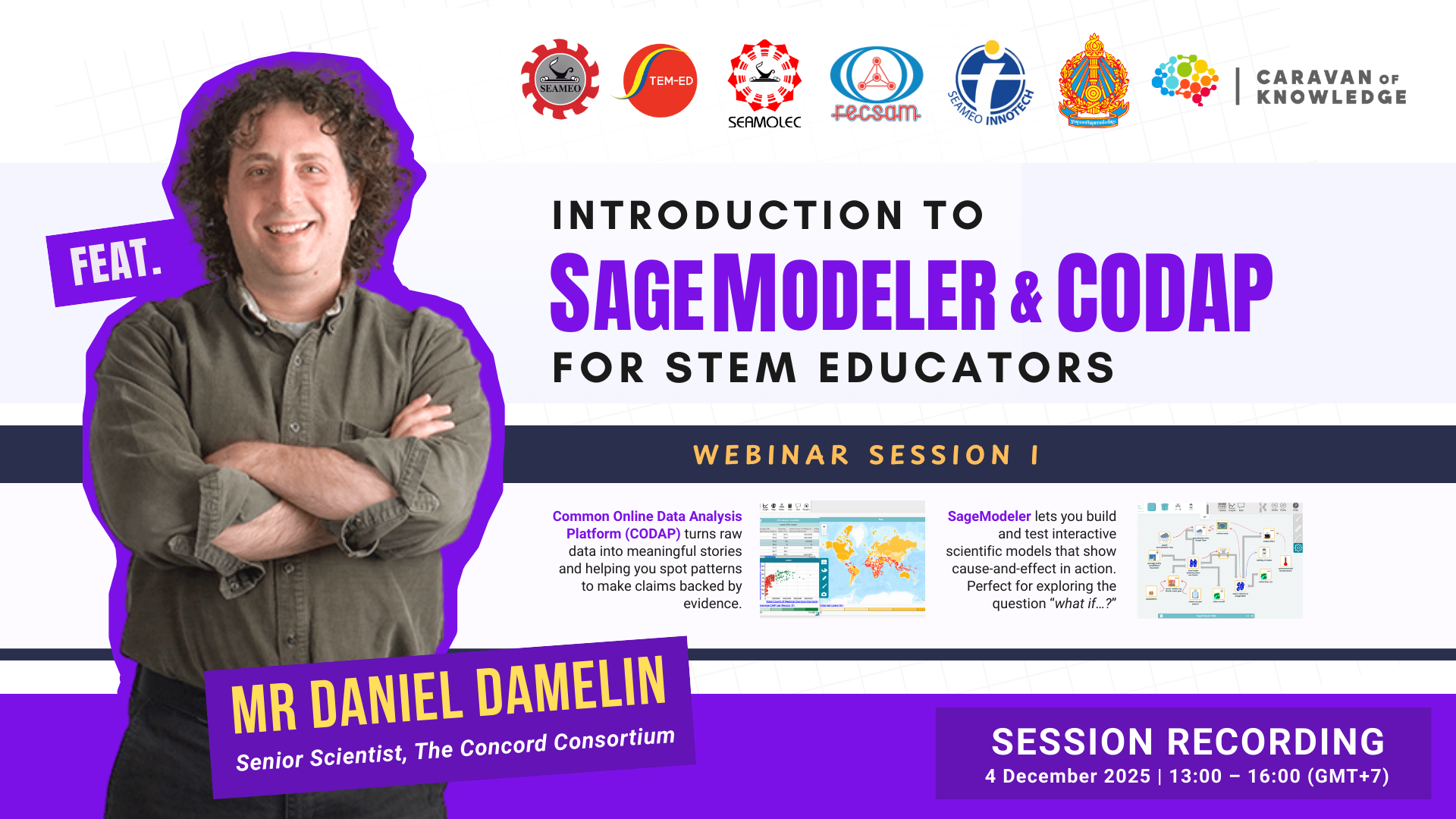
SEAMEO STEM-ED convened Webinar Session 1 under the Sustaining Southeast Asian Teacher Education Programme (SEA-TEP) Webinar Series, titled “Introduction to SageModeler & CODAP for STEM Educators,” on 4 December 2025. The session marked the launch of a regional capacity-building initiative aimed at strengthening data-driven and model-based STEM instruction among educators across Southeast Asia, attracting 185 participants via Zoom.
The SEA-TEP Webinar Series is designed to equip teachers and teacher educators with foundational knowledge and practical experience in using digital tools that support three-dimensional learning and the Claim-Evidence-Reasoning (CER) framework. As the first session in the series, the webinar focused on introducing two free, web-based platforms, CODAP (Common Online Data Analysis Platform) and SageModeler, developed by The Concord Consortium, a non-profit organisation specialising in research and development of technology-enhanced STEM education.
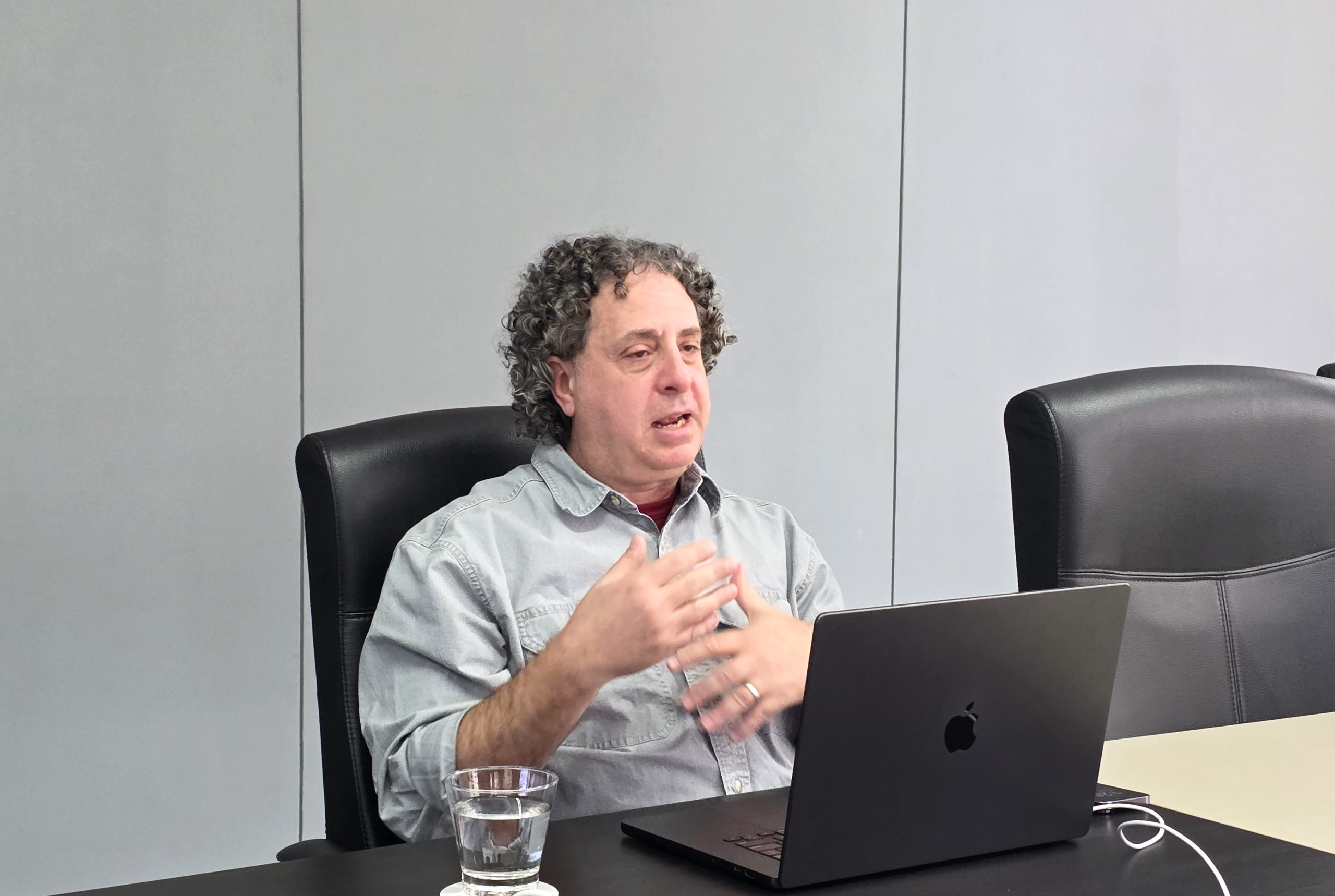
The webinar was led by Mr Daniel Damelin, Senior Scientist at The Concord Consortium, who brings a unique perspective shaped by both classroom teaching and technology development. A former high school chemistry teacher with 14 years of classroom experience, Mr Damelin shared how his work as an educator inspired him to create tools that help students explore scientific concepts that are often difficult to visualise. With a background in computer science, he began developing simulations to allow learners to engage directly with scientific phenomena rather than relying solely on abstract explanations.
This early work in molecular simulations eventually led to the development of SageModeler and CODAP. Mr Damelin emphasised that a common thread across his work is supporting students to learn science, technology, engineering, and mathematics by actively engaging in disciplinary practices—exploring data, building models, testing ideas, and refining understanding through investigation.
During the session, CODAP was introduced as an interactive data exploration environment that enables learners to visualise and analyse data through dynamically linked tables, graphs, and maps. This feature allows students to quickly identify patterns and relationships, supporting inquiry-based learning and evidence-driven reasoning aligned with the CER approach.

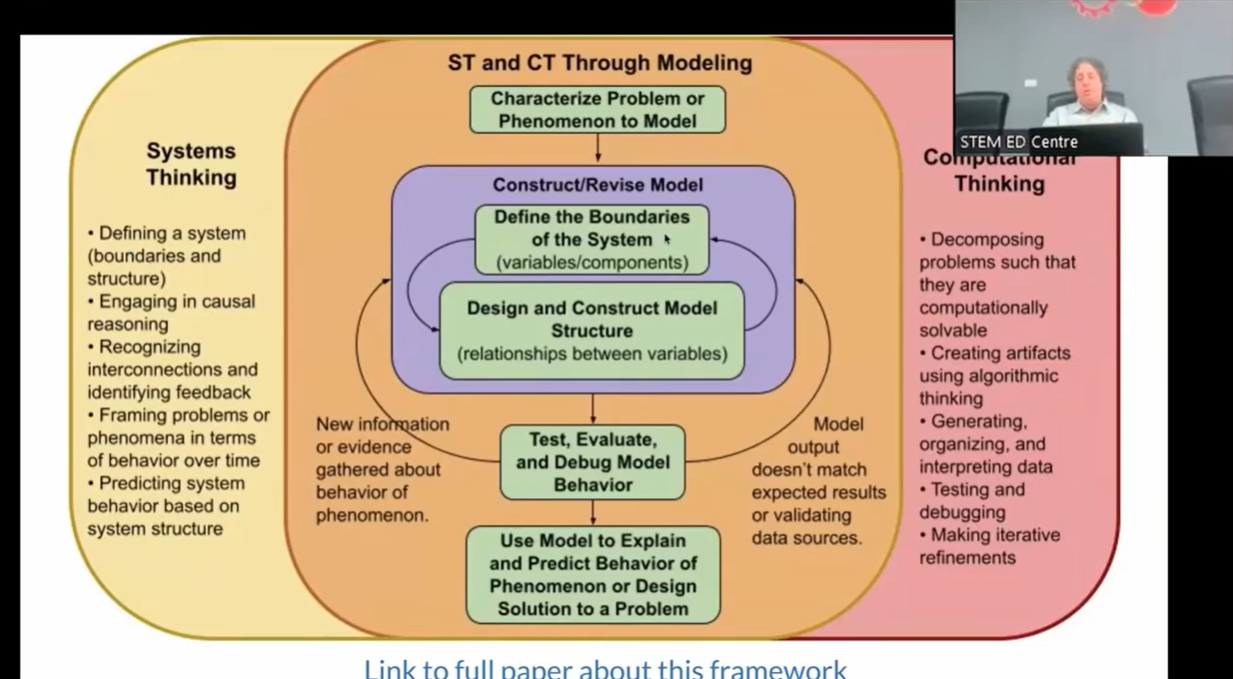
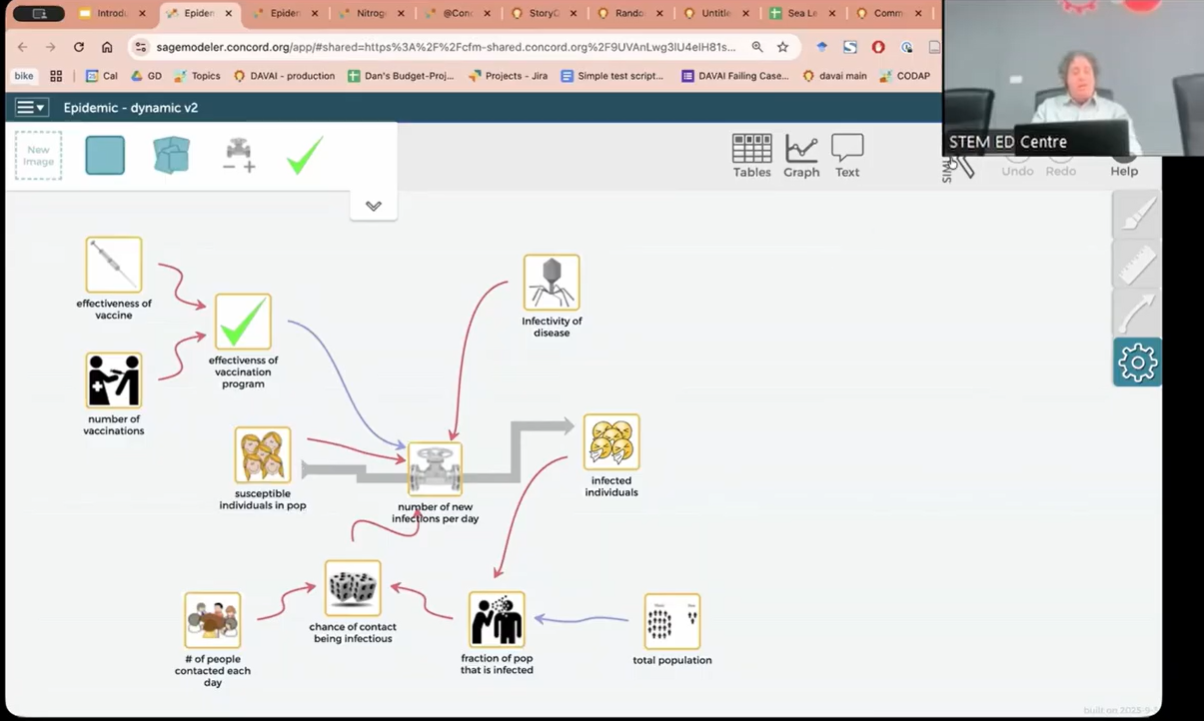
SageModeler, built on the CODAP platform, was presented as a visual, no-code modeling tool that allows students to construct and simulate systems models. Participants explored modeling approaches ranging from simple diagramming to dynamic, time-based simulations, and discussed strategies for integrating modeling into classroom practice through iterative investigation and hands-on activities.
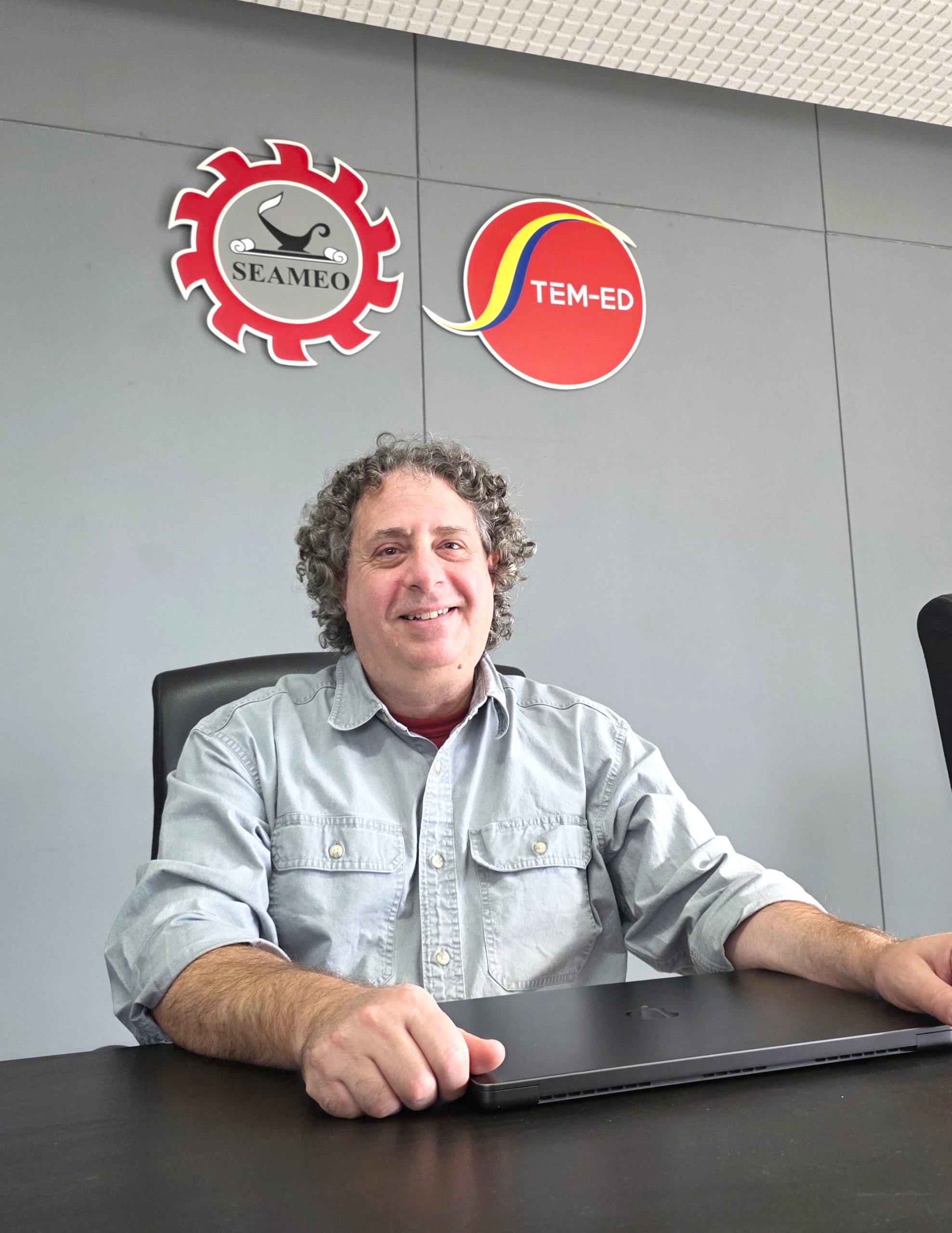
Insights drawn from the Q&A session and a short interview conducted with Mr Daniel Damelin following the webinar further highlighted practical considerations for classroom implementation. He encouraged educators to start with simple models and gradually build complexity, emphasising the importance of clearly defining system boundaries to avoid overwhelming learners. Reflecting on the Southeast Asian context, he highlighted the strong enthusiasm among educators to adopt new digital approaches and underscored the importance of introducing data literacy at an early stage to support scientific reasoning and informed decision-making.
The session concluded with an overview of free curricular resources and teacher guides provided by The Concord Consortium, along with a preview of upcoming SEA-TEP webinars that will build progressively on the foundations introduced in this first session.
A full recording of the webinar is available on YouTube for educators and interested readers who wish to revisit the session online: https://youtu.be/wfVgGYbf6fo